Non-stick pans that never seem to age. Water-repellent jackets that survive any storm. Greaseproof burger wrappers that don’t leak a drop. Behind many of these “miracle” products is a family of chemicals with a far less glamorous nickname: forever chemicals.
They’re officially called PFAS, and they’re quietly slipping into our food, our drinking water, and our kitchens. If you care about what lands on your plate, it’s worth understanding what they are, where they hide, and how to limit your exposure without turning your life upside down.
What exactly are PFAS?
PFAS stands for per- and polyfluoroalkyl substances. It’s not one single chemical but a huge family of more than 4,000 man-made substances used since the 1950s.
They all have one thing in common: a chain of carbon atoms bonded to fluorine. This carbon–fluorine bond is one of the strongest in chemistry. It makes PFAS:
- Heat resistant
- Waterproof
- Grease-proof
- Chemically stable (meaning they don’t break down easily)
These properties are fantastic in an industrial lab… and problematic everywhere else. Because they’re so stable, PFAS don’t really degrade in nature. That’s why they’re called “forever chemicals”.
Where do we find PFAS in everyday life?
You don’t need to work in a factory to encounter PFAS. They’re present in many very ordinary objects and often related to food or the kitchen.
Common sources include:
- Non-stick cookware: especially older or cheaper pans with non-stick coatings (often containing PFAS-based polymers).
- Food packaging: grease-resistant wrappers, boxes and papers used for fast food, pastries, microwave popcorn bags, pizza boxes.
- Takeaway containers: particularly those marketed as “grease-proof” or “oil-resistant”.
- Bakeware and baking paper: some non-stick baking papers, cake tins or moulds.
- Water- and stain-resistant textiles: tablecloths, kitchen aprons, oven mitts, napkins treated to repel stains.
- Cosmetics: some lipsticks, mascaras and foundations use PFAS for long-lasting, waterproof effects.
- Cleaning products: certain sprays and polishes for kitchens and bathrooms.
- Drinking water: in areas where groundwater has been contaminated by industrial discharges or firefighting foams.
We’re not talking about a rare, exotic pollutant. PFAS are widespread, and that’s the core of the issue: we are exposed a little bit, from many sources, almost every day.
Why “forever chemicals” are a problem for health
Because PFAS are so persistent, they can accumulate in the human body over time. Many of them are what scientists call bioaccumulative: they build up faster than we can eliminate them.
Research is ongoing, and not all PFAS are equally toxic, but several of the best-studied ones (such as PFOA and PFOS) have been linked to:
- Immune disruption: reduced vaccine response, more frequent infections.
- Hormone disruption: interference with thyroid hormones and possibly reproductive hormones.
- Cholesterol changes: increased levels of “bad” LDL cholesterol.
- Reduced fertility: associations with decreased fertility and pregnancy complications.
- Certain cancers: particularly kidney and testicular cancer in populations with high exposure.
- Developmental effects in children: lower birth weight, potential impacts on growth and development.
To be clear: eating a burger in a cardboard box once is not going to make you sick overnight. The concern is more subtle and long-term: chronic, low-level exposure from many small sources that add up.
Regulators in Europe, the US and elsewhere are increasingly restricting some PFAS, but we are far from having a complete, global ban on this chemical family.
How PFAS move from products into your body
Understanding the main exposure pathways helps you focus your efforts where they matter most.
- Food: PFAS can migrate from packaging into food, especially:
- Hot foods (fries, burgers, pizzas)
- Fatty foods (pastries, baked goods, microwave popcorn, fast food in general)
- Drinking water: In some regions, PFAS from industrial sources contaminate rivers and groundwater. This can become a major daily exposure route.
- Cookware: Damaged non-stick coatings can release particles that may contain PFAS, especially at high temperatures.
- Dust: PFAS-treated textiles and products can shed tiny particles that end up in household dust, which we inhale or accidentally ingest.
- Cosmetics and care products: Applied directly on the skin or around the mouth (lipsticks), they can be absorbed or ingested.
Again, it’s not about panic, but about understanding where your everyday choices have the biggest impact.
PFAS and ecosystems: why nature can’t cope
What happens when a chemical doesn’t break down?
It travels. It accumulates. And it shows up in places where it has absolutely no business being.
Scientists have found PFAS in:
- Rivers and lakes near industrial sites and firefighting training areas.
- Groundwater and drinking water for entire communities.
- Soil and agricultural land, via sewage sludge used as fertiliser or contaminated irrigation water.
- Marine animals such as fish, dolphins and seals.
- Polar regions and even in the blood of Arctic wildlife, transported by air and ocean currents.
Because PFAS accumulate in living organisms, they move up the food chain: small organisms ingest them, then fish, then larger predators, and eventually us.
For ecosystems, this raises several concerns:
- Chronic exposure in wildlife: especially for species at the top of the food chain.
- Effects on reproduction: some PFAS can affect the fertility and development of animals.
- Long-term contamination of soils and sediments: once there, PFAS are very hard (and expensive) to remove.
In short: PFAS don’t stay where we put them. They spread, they linger, and they can silently reshape both ecosystems and food chains.
What is being done at regulatory level?
Regulation is moving, but slowly compared to the size of the problem.
Some key trends in Europe and internationally:
- Bans on specific PFAS such as PFOA and PFOS, previously used in many coatings and firefighting foams.
- Stricter drinking water limits for certain PFAS, with monitoring obligations for water suppliers.
- Proposals to restrict whole groups of PFAS rather than one by one, to avoid the “regrettable substitution” problem (replacing one banned PFAS with a very similar cousin).
However, there are still thousands of PFAS in use, and regulations vary by country. That’s why consumer choices and pressure on brands are powerful levers in the meantime.
How to reduce PFAS in your kitchen and on your plate
You don’t need to throw out your entire kitchen in a single weekend. The idea is to prioritise high-impact changes and make them gradually.
Choose safer cookware
If one object deserves your attention, it’s your everyday frying pan. It’s in direct contact with food, and it’s often used at high temperatures.
Prefer:
- Stainless steel pans (18/10 quality if possible): durable, PFAS-free, perfect for searing and everyday cooking once you master heat and fat.
- Cast iron (enameled or not): naturally non-stick when well seasoned, excellent heat retention, lasts a lifetime.
- Carbon steel: used in restaurant kitchens, becomes naturally non-stick with use.
- Ceramic-coated pans from reputable brands: check explicitly that they are PFAS-free and PFOA-free.
What to avoid or limit:
- Very cheap non-stick pans without clear labelling on PFAS or PFOA.
- Non-stick pans that are chipped, scratched or peeling: if you see the metal under the coating, it’s time to part ways.
Not ready to give up non-stick? Keep them for delicate foods (eggs, crepes), use moderate heat, avoid metal utensils, and don’t heat them empty.
Rethink food packaging and takeaways
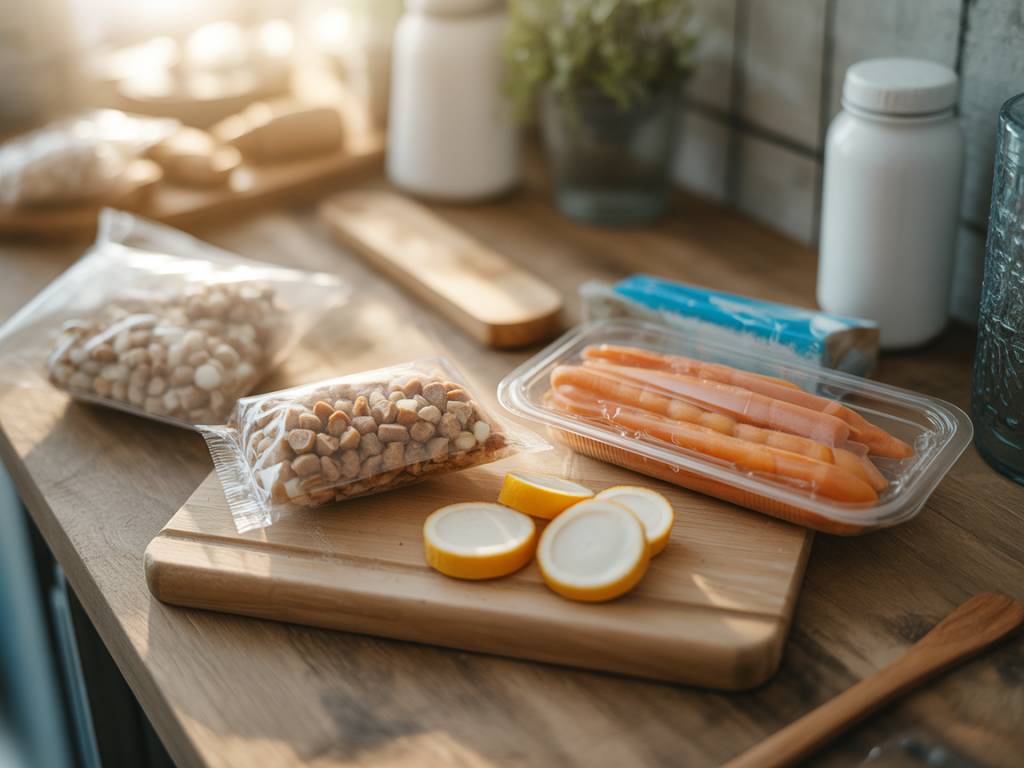
Food packaging is a major, avoidable PFAS source, especially for hot and fatty foods.
Simple switches:
- Limit fast food and ultra-processed takeaways that arrive in greaseproof paper or boxes.
- Bring your own containers (glass, stainless steel) to your local takeaway when possible.
- Transfer food out of packaging as soon as possible, especially if it’s hot or oily.
- Don’t reheat food in its cardboard or paper packaging in the oven or microwave.
- Look for “PFAS-free” or “fluorine-free” claims on compostable food packaging if you use it at home.
At home, prefer:
- Glass containers with airtight lids for storing leftovers.
- Stainless steel lunch boxes and thermos containers for taking meals with you.
Be strategic about water
If you live in an area known to have PFAS-contaminated water, this can be your main exposure route.
Action points:
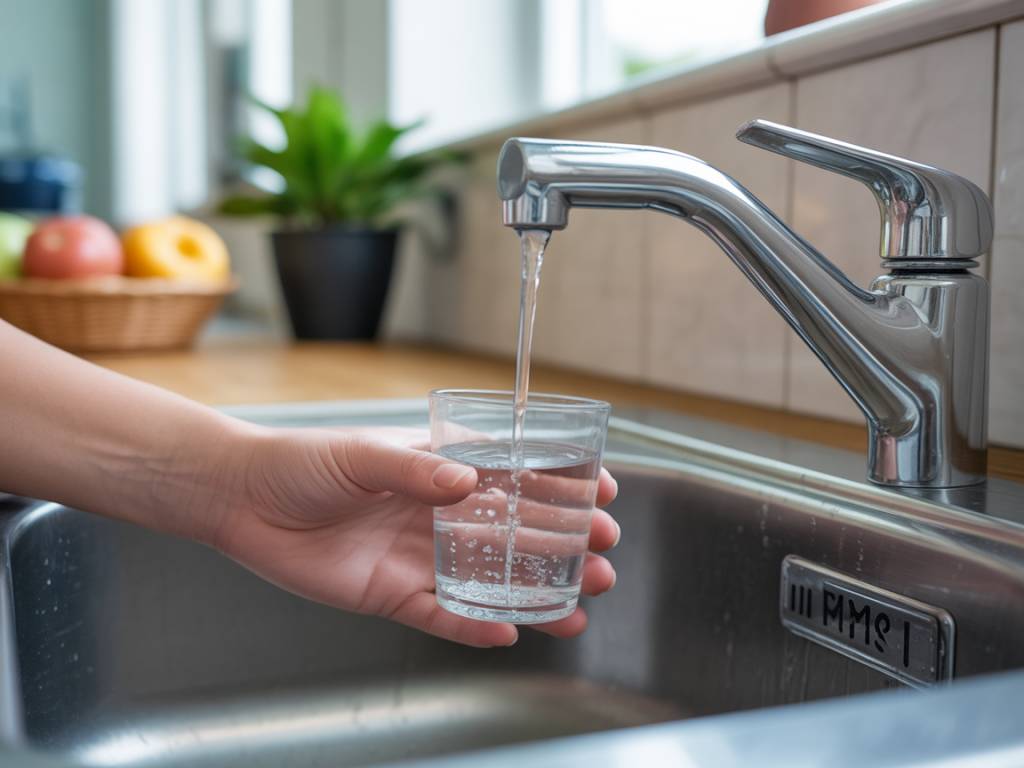
- Check your water provider’s quality reports: many now include PFAS results or at least information on monitoring.
- Look up local analyses from your municipality, environmental agencies or NGOs.
- If PFAS are an issue, consider a water filter with activated carbon or reverse osmosis, specifically certified to reduce PFAS.
- Remember to replace filter cartridges at the recommended frequency; a saturated filter is useless.
Using mains water that’s adequately treated is usually better than buying single-use bottled water, for both cost and sustainability reasons. Only switch to bottled if local contamination is documented and there is no other solution in the short term.
Decode labels and products with a PFAS lens
Unfortunately, PFAS are rarely named openly on packaging. But some clues and claims can guide you.
Positive signs to look for:
- “PFAS-free”, “PFOA-free”, “fluorine-free” on:
- Cookware
- Bakeware and baking paper
- Food packaging
- Waterproof textiles
- Organic labels for food (EU organic, Soil Association, etc.): they don’t solve the PFAS issue entirely, but they reduce other synthetic inputs and often come with stricter environmental standards.
- Short ingredient lists for cosmetics and cleaning products, avoiding long, complex fluorinated names.
Words that may indicate PFAS (often in cosmetics or technical textiles):
- Ingredients with “fluoro” or “perfluoro” in the name.
- Terms like “PTFE” (polytetrafluoroethylene – yes, that’s Teflon) or “polyfluorinated”.
If a product is marketed as “ultra stain resistant”, “waterproof for life”, “grease-proof” without details, it’s worth asking the brand what chemistry they use.
Small, realistic changes that add up
Adopting a PFAS-aware lifestyle doesn’t mean living in fear of your frying pan. It means shifting your habits gradually, starting where the impact is largest and the effort is smallest.
For most households, the highest-value steps look like this:
- Upgrade your main frying pan to stainless steel, cast iron or ceramic PFAS-free.
- Use glass containers and avoid reheating food in its original takeaway or fast-food packaging.
- Reduce fast food frequency, especially greasy items in cardboard or paper wrappers.
- Check local water information and install a suitable filter if needed.
- Choose PFAS-free non-stick paper and bakeware if you bake often.
- Prefer simple, minimally packaged foods over ultra-processed, heavily packaged options.
None of these actions alone will “detox” your life. But together, over months and years, they can substantially reduce your exposure while aligning your kitchen with more sustainable, durable choices.
And that’s the real goal: building a food environment at home that’s good for your health, fair to ecosystems, and practical enough to live with every day.