Tomatoes are one of those everyday ingredients we tend to take for granted. They land in our salads, sauces, and sandwiches almost automatically. But when you look a bit closer, especially at organically grown tomatoes, they turn out to be tiny red powerhouses for your heart, your skin, and even the planet.
In this article, we’ll look at what science actually says about tomatoes, why organic cultivation can make a real difference, and how to choose, cook, and store them so you get the best of their flavour and benefits.
Why organic tomatoes are not “just tomatoes”
Let’s start with a simple question: are organic tomatoes really different from conventional ones, nutritionally speaking?
Several comparative studies have found that organically grown tomatoes tend to have:
- Higher levels of antioxidants, especially lycopene and vitamin C
- A slightly more concentrated flavour due to slower growth and often lower water content
- Lower residues of synthetic pesticides
The main reason? Organic farming relies less on fast-acting synthetic fertilisers and more on soil health. Tomatoes grow a bit more slowly and under slightly more “stress”, which encourages them to produce more protective compounds — the very same antioxidants that benefit our heart and skin.
Of course, “organic” doesn’t magically turn a pale, watery tomato into a sun-ripened beauty. Variety, ripeness, soil, and season still matter a lot. But when you compare tomatoes grown in similar conditions, the organic ones often have a small but real nutritional edge.
Tomatoes and heart health: what’s behind the red colour
If you’ve ever heard that “red foods are good for your heart”, tomatoes are a big part of that story. A lot of it comes down to lycopene, the pigment that gives tomatoes their bright red colour.
Lycopene is a powerful antioxidant that has been associated with:
- Improved blood vessel function
- Reduced LDL (“bad”) cholesterol oxidation
- Lower risk of certain cardiovascular diseases in observational studies
How does that work in real life, beyond the lab?
Oxidative stress plays a role in the damage to blood vessels and cholesterol particles that can lead to plaque formation. By helping to neutralise some of these free radicals, lycopene seems to support the long-term health of your arteries. Several population studies have shown that people with higher blood levels of lycopene tend to have a lower risk of heart disease.
Tomatoes also bring other heart-friendly nutrients to the table:
- Potassium – helps balance sodium and supports healthy blood pressure
- Vitamin C – another antioxidant that supports blood vessels
- Fibre (especially in tomato skins) – gently supports cholesterol balance and satiety
And where does organic come in? Some research suggests organic tomatoes can contain higher lycopene levels on average, particularly when grown in rich, living soils. It’s not a miracle leap, but if you eat tomatoes regularly, that small difference can add up over time.
Raw vs cooked: how to get the most lycopene
Interesting twist: you actually absorb more lycopene from cooked tomatoes than from raw ones, especially when they’re eaten with a bit of fat.
Lycopene is fat-soluble. Heating tomatoes helps break down plant cell walls and makes this pigment more available. That means:
- Tomato sauce can be richer in bioavailable lycopene than raw tomato slices
- A drizzle of olive oil over tomatoes (raw or cooked) improves absorption
- Slow cooking can be your ally, as long as you don’t burn or overly brown the sauce
In everyday terms, if you want tomatoes to support your heart health, think “variety over perfection”:
- Raw tomatoes in salads and on toast for vitamin C and freshness
- Homemade sauces and soups for concentrated lycopene
- Tomato paste (ideally organic) as a base for stews and dressings
You don’t need special supplements or fancy powders. A regular rotation of simple tomato dishes, cooked with a healthy fat like extra virgin olive oil, is already a strong base.
Tomatoes for skin: beauty from the inside (and the kitchen)
One of the most interesting areas of tomato research is skin health, especially protection against UV damage.
Again, lycopene is in the spotlight. Several small human studies have found that people who regularly consume tomato products rich in lycopene may show:
- A modest increase in their skin’s natural defence against UV-induced redness
- Less oxidative damage in the deeper layers of the skin
- Slight improvements in skin texture and hydration when tomatoes are part of an overall balanced diet
No, tomatoes are not a replacement for sunscreen. But they can be a useful internal ally. Think of them as one brick in a broader “skin-friendly” lifestyle: sun protection, hydration, quality fats, enough sleep, and a plant-rich diet.
Tomatoes also contain:
- Vitamin C – supports collagen production and helps protect against free radical damage
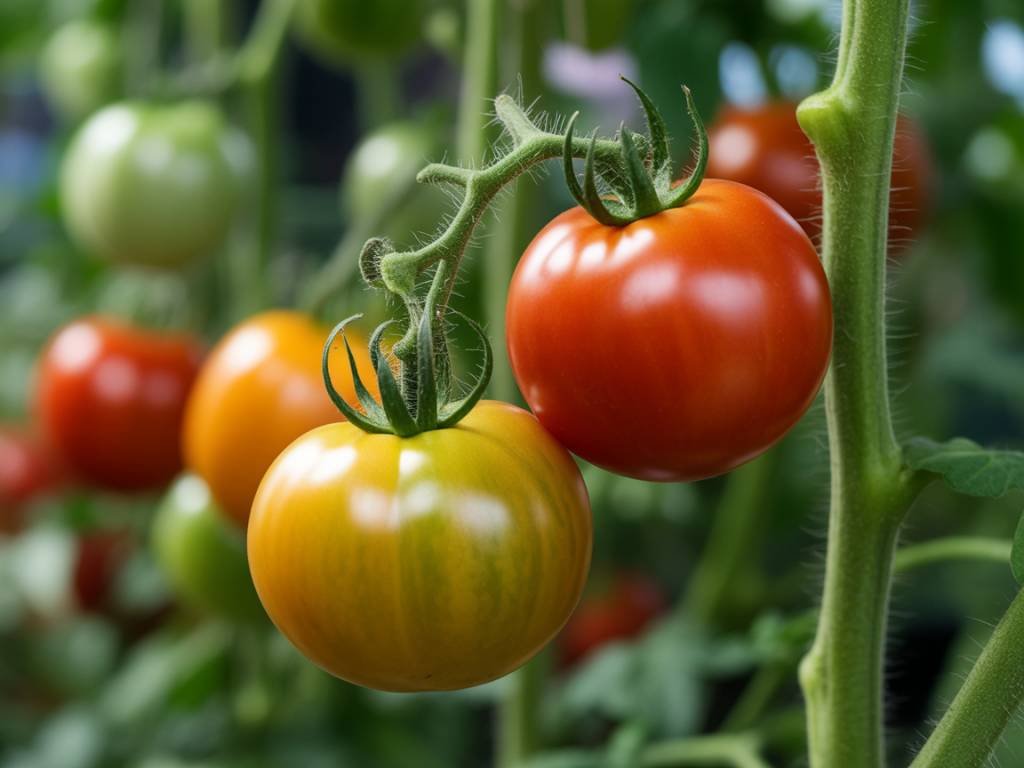
- Beta-carotene (especially in orange and “tiger” varieties) – another antioxidant linked to skin health
- Polyphenols – plant compounds with anti-inflammatory properties
Here again, organic tomatoes often show slightly higher levels of these protective compounds, simply because they’ve had to “work” harder in the field, without synthetic pesticides or fertilisers doing all the protective work for them.
Simple ways to use tomatoes daily for skin and heart
You don’t need elaborate recipes to benefit from tomatoes. The key is consistency and simplicity. Here are a few ideas you can drop straight into your week:
- Breakfast: Wholegrain toast with mashed tomato, olive oil, a pinch of salt, and oregano (a Mediterranean classic)
- Lunch: Lentil and tomato salad with cucumber, red onion, parsley, lemon, and olive oil
- Snack: Cherry tomatoes with a handful of nuts or seeds for a combo of antioxidants and healthy fats
- Dinner: One-pan roasted vegetables with tomatoes, courgette, onion, garlic, and chickpeas, drizzled with olive oil
- Batch-cooking: A large pot of organic tomato sauce on Sunday to freeze in portions for the week
Try to pair tomatoes with:
- A source of fat (olive oil, avocado, nuts, seeds)
- Fresh herbs (basil, thyme, oregano) that add their own antioxidants
- Whole grains or pulses for slow-release energy and extra fibre
Environmental benefits: why organic tomato farming matters
Let’s step out of the kitchen for a moment and look at the fields. What changes when tomatoes are grown organically?
At its best, organic tomato farming aims to:
- Eliminate synthetic pesticides and herbicides
- Rely on crop rotation, compost, and green manures to nourish the soil
- Encourage biodiversity: insects, soil microbes, and neighbouring plants
- Use non-chemical methods for pest control (beneficial insects, nets, resistant varieties)
The environmental gains can be significant:
- Healthier soils: Organic systems tend to store more carbon in the soil and improve its structure, helping retain water and resist erosion.
- Cleaner water: Less risk of synthetic pesticide and fertiliser runoff into rivers and groundwater.
- More biodiversity: Fields and greenhouse edges can become refuges for pollinators, ladybirds, and other beneficial species.
Not all organic farms are perfect, and large-scale greenhouse production (organic or not) still has an energy cost, especially when heated. But when you compare two tomatoes grown in similar regions and seasons, the organically grown one often has a lower impact in terms of synthetic chemical use and soil health.
How to choose tomatoes that are good for you and the planet
In front of the shelves, the choice can be overwhelming: vine tomatoes, cherry, plum, organic, non-organic, local, imported. Here are some simple, practical guidelines.
If you can only change one thing: Prioritise organic for tomatoes you eat often and with the skin. Tomatoes are among the crops that can carry multiple pesticide residues in conventional farming.
Then refine your choices step by step:
- Favour in-season: In Europe, the tastiest, most sustainable tomatoes usually run from late spring to early autumn. Out of season, consider organic canned or jarred tomatoes rather than fresh, waterlogged ones.
- Look for local or regional: Shorter transport often means better flavour and a smaller carbon footprint.
- Check the label: In the EU and UK, the organic logo or the word “organic” must meet strict standards: no synthetic pesticides, no GM seeds, and controlled fertilisation practices.
- Trust your senses: A good tomato smells like a tomato. If it has no scent and a very hard texture, it was likely picked too early.
If your budget is tight, you can mix approaches:
- Buy organic tomatoes for raw dishes (salads, sandwiches)
- Use good-quality (not necessarily organic) canned tomatoes for long simmering sauces
- Grow a couple of organic plants at home if you have a balcony or small garden
Cooking and prep tips that preserve nutrients
Once your tomatoes are in the kitchen, how you handle them can change both flavour and nutritional value.
Some practical tips:
- Avoid the fridge for ripe, fresh tomatoes unless your kitchen is extremely hot. Cold temperatures dull their aroma and texture.
- Store at room temperature and out of direct sunlight, stem side down to slow moisture loss.
- Use slightly damaged tomatoes quickly in cooked dishes (soups, sauces) rather than salads.
- Keep the skin on when possible, as many antioxidants and fibres are concentrated there.
- Cook gently: a slow simmer at low heat preserves more nutrients than high, aggressive heat.
If you’re batch-cooking tomato sauce:
- Start with a base of olive oil, onion, and garlic
- Add chopped organic tomatoes or canned whole tomatoes
- Simmer slowly with herbs and a pinch of salt
- Cool quickly, then portion and freeze
Frozen tomato sauce retains much of its lycopene content and is a real time-saver on busy evenings.
What about processed tomato products?
Not everyone has time to slow-roast tomatoes every week. Thankfully, some processed tomato products retain – or even concentrate – their benefits.
Here is a quick guide:
- Canned whole or chopped tomatoes: Great source of lycopene and vitamin C (though some is lost in processing). Prefer organic, BPA-free cans or glass jars if available.
- Tomato paste: Very concentrated lycopene. A spoonful added to soups or stews is an easy boost.
- Passata (sieved tomato): Smooth, versatile base for sauces. Again, organic versions help reduce pesticide exposure.
- Ketchup: Contains tomatoes, but often a lot of sugar and salt. Keep for occasional use and check labels; some organic brands offer reduced sugar and cleaner ingredient lists.
Remember: even a very healthy ingredient can turn less helpful if it comes loaded with added sugars, saturated fats, or excessive salt. Reading labels becomes your best ally.
Integrating organic tomatoes into a realistic weekly routine
Knowing is one thing; doing is another. Here is how you can make organic tomatoes a quiet, regular ally for your heart, skin, and the environment without overhauling your entire life.
On your shopping list:
- Add “organic tomatoes or organic canned tomatoes” as a staple, not an afterthought.
- When in season, buy a bit extra for simple batch cooking (sauce, soup, roasted tray).
- Keep at least one jar or carton of organic passata in the cupboard for last-minute dinners.
In your weekly meal plan:
- Plan 2–3 tomato-based meals: one raw (salad), one cooked (pasta sauce, shakshuka), one soup or stew.
- Pair them with legumes, whole grains, and a source of healthy fats.
- Rotate colours: red tomatoes, orange or yellow varieties, and other colourful vegetables for a broader antioxidant spectrum.
To reduce waste:
- Turn soft tomatoes into a quick sauce or soup instead of throwing them away.
- Freeze extra sauce in ice cube trays for easy single portions.
- Use the last spoonfuls of tomato paste in dressings or marinades rather than letting the jar mould in the fridge.
Step by step, these small habits transform your relationship with a very humble ingredient. The goal isn’t perfection but regular, enjoyable use.
When grown organically, tomatoes do more than add colour to your plate. They feed your heart with protective compounds, support your skin from within, and encourage farming practices that respect soil life and water quality. With a few smart choices at the shop and in the kitchen, that simple red fruit becomes a quiet, daily ally for your health and for the land that produced it.