Hectic day, empty fridge, and a growling stomach at 7.30 pm. What happens next? For many of us: a sad sandwich, takeaway, or skipping vegetables altogether. Yet, there’s an ultra-practical ally we often underestimate: organic frozen foods.
As a food consultant, I spend a lot of time with producers, in supermarkets, and in home kitchens. One thing I hear all the time is: “I want to eat healthier, but I just don’t have time to cook during the week.” If that sounds familiar, this article is for you.
Let’s turn your freezer into a mini organic grocery store you can cook from in 15 minutes or less.
Why organic frozen food is perfect for hectic days
Frozen food still suffers from an unfair image problem: people often imagine bland vegetables or processed ready-meals. But organic frozen foods are a different story — especially if you choose plain ingredients (vegetables, fruits, fish, grains) rather than ultra-processed dishes.
Here’s why they’re so useful when life is busy:
- Speed: Most frozen vegetables are already washed, peeled and chopped. That can save you 10–20 minutes per meal.
- Nutrition: Organic veg are usually frozen just after harvest. They often retain more vitamins than “fresh” veg that have spent days travelling and sitting on shelves.
- Less waste: You use only what you need and put the rest back. No more half courgette mouldering in the fridge.
- Always available: Tired, late, bad weather, shops closed? Your freezer doesn’t care. Dinner is still possible.
- Budget-friendly: Organic frozen veg and fruit are often cheaper per kilo than their fresh equivalents, especially off-season.
For hectic days, the real strength of organic frozen food is that it removes preparation time and decision fatigue. You don’t need to peel, chop, or think too hard. You just assemble.
Choosing better organic frozen foods: what to look for
Not all frozen products are equal. A few minutes spent reading the label will save you from hidden sugars, salt and additives.
Here are simple rules I use when I shop, either for myself or with clients:
- Short ingredient list: For plain vegetables and fruits, the list should ideally contain one ingredient: the product itself. “Organic peas (100%)”. That’s it.
- Watch the salt and sauces: Avoid veg “in sauce” for everyday use. They’re often loaded with salt, cream, sugar, or thickeners. Better to season them yourself at home.
- Prefer whole foods: Choose whole fillets of fish, plain shrimps, berries, chopped spinach, mixed veg, rather than breaded or pre-fried products.
- Certifications: Look for trusted organic labels (Soil Association in the UK, EU organic leaf, etc.). These guarantee farming standards, limits on additives, and no GMOs.
- Packaging check: Avoid bags full of ice crystals or frozen “blocks” where everything is stuck together — it usually means the cold chain was broken.
Think of your freezer as a curated collection of pure ingredients, like a dry store — just frozen. The cleaner the ingredient list, the more flexible your cooking.
Freezer essentials: your 15-minute meal toolkit
To cook fast on busy evenings, you don’t need 30 different products. A small, well-thought-out selection is enough to build many meals.
Here’s a basic organic freezer “capsule” I often recommend:
- Vegetables
- Mixed vegetable blends (e.g. peas–carrots–green beans, “Mediterranean mix”)
- Spinach (chopped or leaf)
- Broccoli florets or cauliflower
- Peas (they cook in a few minutes and kids often like them)
- Onion or shallot mix (huge time-saver for any savoury dish)
- Protein
- Fish fillets (wild if possible: salmon, white fish, mackerel)
- Shrimps or prawns (peeled)
- Organic edamame beans or broad beans
- Frozen cooked lentils or chickpeas if you can find them (otherwise, keep jars in the cupboard)
- Fruit
- Berry mix (for quick breakfasts, snacks, or desserts)
- Mango or pineapple pieces (great in smoothies or with yoghurt)
- Carb bases
- Frozen cooked quinoa or brown rice (or cook a big batch fresh and freeze in portions)
- Wholegrain flatbreads or wraps kept in the freezer (they defrost quickly in a pan)
With this toolbox, plus a few pantry staples (olive oil, spices, canned beans, wholegrain pasta), you can improvise a lot of meals in under 20 minutes.
Defrosting rules: stay safe, stay efficient
Another myth: “Frozen food takes too long because you have to defrost everything.” Not always. Many organic frozen ingredients are designed to go straight from freezer to pan or oven.
A few simple rules to keep things safe and simple:
- Vegetables and fruits: Usually don’t require defrosting. Add veg directly to a hot pan, wok, or steamer. Use fruits straight from frozen for smoothies or heat gently in a saucepan for a quick compote.
- Fish fillets: Many brands indicate “cook from frozen” with adjusted cooking times. Otherwise, place in the fridge in the morning or use a quick cold-water bath (fish in a sealed bag, submerged in cold water for 20–30 minutes).
- Never defrost at room temperature: Especially for meat and fish. Bacteria love that temperature window.
- Once defrosted, don’t refreeze raw: You can, however, refreeze if the food has been fully cooked.
When you plan even a tiny bit ahead — for example, tossing a couple of fish fillets into the fridge in the morning — your evening cooking becomes almost as quick as heating up a ready-meal, but much healthier.
5 quick, healthy meal ideas with organic frozen foods
Let’s get practical. Here are five no-fuss frameworks you can adapt to whatever you have in your freezer. Each one takes about 15–20 minutes, uses mostly frozen organic ingredients, and requires minimal chopping.
Veggie-loaded fried rice (perfect for leftovers)
What you need:
- Frozen mixed vegetables (e.g. peas–carrots–green beans or an “Asian mix”)
- Cooked brown rice (fresh or frozen)
- Frozen chopped onions
- Eggs (or tofu for a vegan version)
- Sesame oil, tamari or soy sauce, garlic, ginger (fresh or powdered)
How to do it:
- Sauté frozen onion in a little oil until fragrant.
- Add frozen mixed veg straight from the bag. Cook on high heat until just tender.
- Push veg to one side of the pan, scramble 1–2 eggs on the other side (or add crumbled tofu).
- Add cooked rice, a splash of tamari/soy, sesame oil, garlic and ginger. Stir-fry everything together for a few minutes.
Result: a complete meal with veg, protein and whole grains, using mostly frozen ingredients and whatever odds and ends of rice you have.
15-minute fish traybake with frozen veg
What you need:
- Frozen organic fish fillets (salmon, cod, etc.)
- Frozen broccoli, green beans or Mediterranean veg mix
- Olive oil, lemon, dried herbs, salt, pepper
How to do it:
- Preheat your oven to a high temperature (around 220°C / fan 200°C).
- Spread frozen veg in a single layer on a baking tray, drizzle with olive oil, salt, pepper and herbs.
- Place fish fillets on top (defrosted or “cook from frozen” if the pack says it’s safe). Season similarly, add lemon slices on top if you have them.
- Bake 12–20 minutes depending on fillet thickness and whether they were frozen or defrosted.
Everything cooks together on one tray. Minimal washing up, maximal nutrients.
Green power pasta with frozen spinach and peas
What you need:
- Wholegrain pasta
- Frozen spinach (chopped)
- Frozen peas
- Garlic, olive oil, grated cheese or nutritional yeast, lemon zest
How to do it:
- Cook pasta according to packet instructions.
- In a separate pan, gently fry garlic in olive oil. Add frozen spinach and peas, cook until hot.
- Reserve a mug of pasta cooking water. Drain pasta, then add to the pan with veg.
- Stir everything together with a splash of pasta water to loosen, add cheese or nutritional yeast, adjust seasoning and finish with lemon zest.
You’ve just turned simple pantry and frozen ingredients into a veg-packed dinner in 15 minutes.
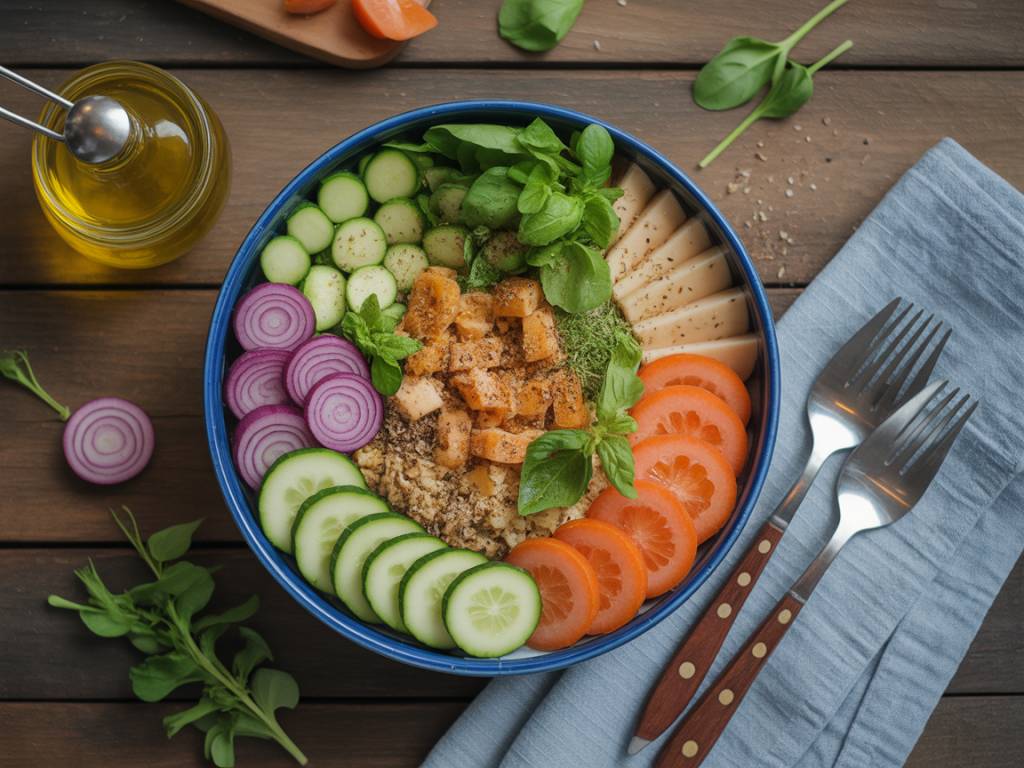
Protein bowls from the freezer
Think of this as a template rather than a recipe. Perfect when everyone at home wants something slightly different.
What you need:
- Base: frozen brown rice, quinoa or wholegrain couscous
- Veg: any frozen mix, broccoli, spinach, peas, edamame
- Protein: frozen fish, shrimps, edamame, or a jar of chickpeas/lentils from the cupboard
- Extras: seeds, nuts, a ready-made hummus, yoghurt, simple dressing
How to do it:
- Reheat or cook your grain base.
- Steam or stir-fry your frozen veg.
- Cook your frozen protein (pan-fry fish, sauté shrimps, or simply rinse canned legumes).
- Assemble in bowls: grain + veg + protein + a drizzle of dressing and some crunchy toppings.
This is a great “fridge-clear-out” formula that relies on your freezer to provide the constant basics.
Breakfast-for-dinner: berry oat skillet
Ideal on nights where you crave something comforting but still want fibre and fruit.
What you need:
- Frozen organic berries
- Rolled oats
- Plant-based milk or dairy milk
- Cinnamon, vanilla, a touch of honey or maple syrup
- Optional: nuts, seeds, yoghurt
How to do it:
- In a small pan, heat a generous handful of frozen berries with a splash of water until they soften.
- Add oats and enough milk to cover. Simmer 5–8 minutes until creamy.
- Add cinnamon, vanilla, and a drizzle of honey or maple to taste.
- Top with nuts or seeds and a spoonful of yoghurt if you like.
This also makes a brilliant make-ahead breakfast if you double the quantities.
How to season frozen foods so they taste fresh
The most frequent complaint about frozen veg is “they’re bland”. In reality, they mainly lack two things: high heat and seasoning.
Here’s how to fix that quickly:
- Use high enough heat: Stir-fry or roast rather than simmer when possible. This gives colour and flavour.
- Don’t overcrowd the pan: Too many frozen veg at once = lots of water = steaming instead of sautéing.
- Add flavour at 3 key moments:
- At the start (onions, garlic, ginger, spices in oil)
- Mid-cooking (herbs, sauces like tamari, tomato paste)
- At the end (lemon juice, fresh herbs, nuts, seeds)
- Lean on “finishing touches”: A handful of toasted seeds, a spoon of yoghurt, or a squeeze of lemon can transform a very simple frozen-veg dish.
Think of frozen ingredients as your base. The personality of the dish comes from how you cook and season them.
Planning tips: how to always have a backup healthy meal
The real magic happens when you combine organic frozen foods with a tiny bit of planning. I’m not talking about spending Sunday batch cooking for hours. Just a few simple habits.
- Set a “freezer minimum”: Decide on 5–7 items you always want to have. When one runs low, add it to your shopping list automatically.
- Freeze your own leftovers: Cooked beans, grains, soup portions, sauces. They all freeze beautifully and combine well with frozen veg and fish.
- Label everything: Date + content. That way you actually use what you freeze, instead of letting it turn into a mystery block of ice.
- Think in “components”: A good freezer holds cooked building blocks: a tomato sauce, a lentil dhal, cooked quinoa. On a hectic day, pair one of these with frozen veg and you’re done.
- Protect against “nothing to eat” panic: Keep at least one full emergency meal set: for example, a bag of frozen veg + a box of wholegrain pasta + a portion of tomato sauce in the freezer.
With that system, hectic days stop derailing your eating habits. You just switch to “freezer mode” and follow a formula you know works.
Final thoughts: frozen doesn’t mean compromised
If you’ve been thinking of frozen food as a last resort, it may be time to upgrade its status in your kitchen. Organic frozen vegetables, fruits and proteins are powerful tools for eating better when life is messy, busy, and unpredictable.
The key is to treat your freezer like a carefully stocked pantry, not a graveyard for forgotten leftovers. Choose clean, organic products with short ingredient lists, keep a few versatile staples on hand, and rely on simple meal templates you can cook almost on autopilot.
On hectic days, you don’t need perfection. You need something warm, colourful, and nourishing that fits into an overbooked schedule. With the right frozen foods, that becomes not just possible, but pleasantly easy.