Standing in a supermarket aisle, staring at a wall of “eco”, “natural”, “green”, “pure”, “farm fresh” labels… and still not knowing what to put in your basket? You’re not alone. Between real organic certifications and clever marketing, it’s becoming harder and harder to know what actually matches your values – and what’s just expensive green paint on a packet.
Let’s go through the main organic labels you’ll see in UK supermarkets, how to spot real certifications in a second, and how to avoid falling for greenwashing. The aim: you leave with a trolley that matches both your budget and your ethics, without needing a PhD in food law.
What “organic” legally means (and why that matters)
Before we zoom in on the logos, it helps to know that “organic” isn’t just a nice word on packaging. In the UK and EU, it’s a legally protected term. That means:
- Strict rules on pesticides and fertilisers: only a limited list of natural or low-impact substances allowed.
- No synthetic herbicides like glyphosate in organic production.
- GMOs are banned from organic farming and animal feed.
- Animal welfare standards are higher: more space, outdoor access, slower growth, limited routine antibiotics.
- Inspections are regular: farms and processors are audited at least once a year by certifying bodies.
If a product is legally organic, it must be certified. No certification, no real “organic” – simple as that. Everything else (“natural”, “eco”, “authentic”, green leaves on the label) is marketing, not a guarantee.
The three key organic logos to know in the UK
Let’s start with the labels that really count. If you only remember three, let them be these.
Soil Association: the gold standard for many British shoppers
The Soil Association is the UK’s best-known organic certifier. You’ll often find its logo on supermarket own-brand organic ranges and on many specialist brands.
What it looks like: a round black-and-white logo made of three interlocking shapes forming a circle, with “Soil Association Organic” around it.
What it means in practice:
- Meets all UK and EU organic regulations.
- Often includes stricter standards than the legal minimum, especially on animal welfare and additives.
- Regular inspections of farms, processing sites and even packaging facilities.
On your shopping trip, use it for: milk, yoghurts, eggs, meat, ready meals, baby food and pantry staples. If you see the Soil Association logo, you’re looking at a product that’s been through a serious approval process.
EU Leaf logo: the basic organic guarantee for European products
You’ve probably seen it without necessarily noticing: a green rectangle with a white leaf formed by stars. Even post-Brexit, it’s still widely used on organic products made in the EU and imported into the UK.
What it looks like: a bright green box with a white leaf made of small stars.
What it guarantees:
- Complies with EU organic regulation (which the UK originally adopted and still closely mirrors).
- 95% minimum organic ingredients (by agricultural weight) in processed foods using the word “organic”.
- No GMOs and very limited synthetic pesticides and fertilisers.
Next to the leaf, you’ll see a code like “GB-ORG-05” or “DE-ÖKO-001” plus “EU Agriculture” or “Non-EU Agriculture”. This tells you which certifying body inspected the product and where the ingredients come from.
Quick trick: Leaf logo + certification code + “organic” in the product name = you’re looking at the real thing, not just green branding.
UK organic certifiers (beyond Soil Association)
You might also come across other certification bodies. They’re less famous to the general public but just as official. Look out for acronyms like:
- OF&G – Organic Farmers & Growers
- BDA Organic (Biodynamic Association)
- SFPS (Scottish Food Quality Certification) organic
How to read them:
- They will appear as a named logo and often as the code on the back, e.g. “GB-ORG-02”.
- If they certify “organic”, they must all meet the same legal baseline. The logo design may differ; the law behind it doesn’t.
Don’t worry if you don’t recognise the logo at first glance. Flip the pack: if it clearly says “certified organic by [name]” and shows an ORG code, it’s legitimate.
Real organic vs. greenwashing: 10 packaging tricks to watch for
Greenwashing loves the supermarket. The trick is simple: borrow the visual codes of organic (plants, earthy colours, farms, happy cows), but avoid the strict rules and inspections. Here’s how to spot it quickly.
1. Words that don’t mean anything legally
Be sceptical when you see:
- “Natural”
- “Wholesome”
- “Eco-friendly”
- “Sustainable choice”
- “Farm fresh”
None of these words have a clear, legal definition in the same way “organic” does. They can be used on ultra-processed foods loaded with additives and from intensive farming.
2. Green and brown packaging
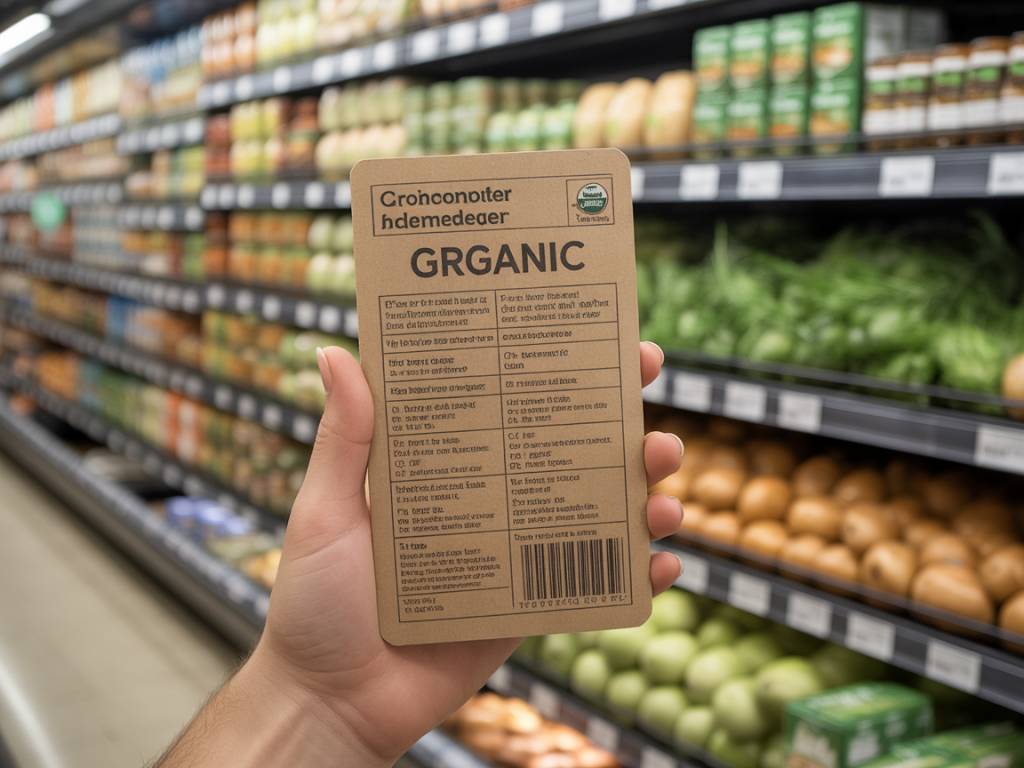
Brown kraft paper, green fonts, leaves and rustic fonts are design choices, not proof of organic farming. If there’s no certification logo, assume nothing.
3. Tiny leaf icon that looks “official” but isn’t
Some brands will invent their own “green” icon: a small leaf with “eco” written inside, a private “good for the planet” badge, etc. Ask yourself:
- Is there a real certifier name (Soil Association, OF&G, etc.)?
- Is there a certification code (like GB-ORG-XX)?
If the answer is no, it’s branding, not certification.
4. Front says “organic style”, back says nothing
Look for vague formulations like:
- “Inspired by organic farming”
- “Made with organic principles in mind”
- “Organic taste”
If it’s truly organic, the brand will simply say “organic” and show the certification clearly. They pay for the inspection – they’re not shy about it.
5. “Made with organic…” without a logo
Sometimes you’ll see: “Made with organic herbs” or “contains organic ingredients”. That can be honest, but it doesn’t mean the whole product is organic.
Check the ingredients list:
- Are only 1–2 ingredients marked “organic”, buried in a long list?
- Is there a percentage mentioned, like “20% organic ingredients”?
- Is there a proper organic logo at all?
Partial organic is better than nothing, but don’t pay full “organic price” for a product that’s mostly conventional.
6. Misleading “free from” claims
“Pesticide-free” or “no added hormones” can sound very virtuous. But:
- “No added hormones” is standard for poultry and pigs in the UK – it’s not a special effort.
- “Pesticide-free” is unregulated on labels and doesn’t equal organic; it might simply mean below detection limits for certain tests.
Focus on the certification logos, not the marketing slogans.
7. Vague sustainability icons
“Planet-friendly”, “climate-smart”, “earth-positive” badges are usually invented by the brand itself. Unless a logo refers to a known, independent scheme (Fairtrade, MSC, Rainforest Alliance, etc.), treat it as a design element, not hard proof.
8. Front says “British farm”, back says very little
Union Jacks and illustrations of rolling fields don’t guarantee anything about farming methods. For meat, dairy and eggs, look for:
- Organic certification logo.
- RSPCA Assured or other welfare labels in addition, if you care about welfare specifically.
“British” tells you origin, not how the animal was raised.
How to read an organic label in 15 seconds
Next time you pick up a product and wonder if it’s genuinely organic, run through this quick checklist:
- Step 1 – Look for a recognisable organic logo: Soil Association, EU leaf, or another named UK certifier.
- Step 2 – Flip to the back: find the certifier code, like “GB-ORG-05”.
- Step 3 – Check the product name: does it say “organic” in the description (e.g. “organic oats”, “organic tomato soup”)?
- Step 4 – Read the ingredient list: are most ingredients clearly marked as organic (often with an asterisk and a note like “*organic”)?
- Step 5 – Beware of only one organic ingredient: if just one element is organic and the rest conventional, ask whether the price premium is justified.
Do this a few times and you’ll be able to tell at a glance whether a product is certified, partially organic, or just dressed in green.
Which foods are worth prioritising organic?
Most of us have a budget. The good news: you don’t need to buy everything organic to make a difference. Start where impact is highest – either for your health, or for the planet and animal welfare.
Good candidates to buy organic when you can:
- Apples, berries, grapes, leafy greens: these often carry higher pesticide residues in conventional farming. Organic versions tend to reduce your overall exposure.
- Baby food and kids’ snacks: young children are more sensitive to contaminants; organic here can be a strategic choice.
- Dairy products: organic milk, yoghurt and butter generally come from cows with pasture access and stricter welfare standards, and feed without GMOs.
- Eggs and poultry: organic standards give birds more space, outdoor access and limit routine antibiotics.
- Staples you eat every day: oats, porridge, flour, lentils, pasta, rice. Small changes here add up over time.
Where you can be more flexible:
- Thick-skinned fruit like bananas, oranges, avocados – the peel is removed, which reduces residues.
- Occasional treats (biscuits, chocolate, ice cream): if budget is tight, focus your organic spend where you get daily benefit first.
Organic doesn’t always mean “healthy” (and that’s important)
A quick but crucial reminder: “organic” tells you how ingredients were produced, not how balanced the final product is.
You can absolutely have:
- Organic biscuits that are still high in sugar and saturated fat.
- Organic crisps that are still salty and calorie-dense.
- Organic ready meals that are heavy in cream and cheese.
Organic is one dimension of quality, not a free pass. Keep your usual reflexes:
- Check the nutrition table (sugars, salt, fats).
- Look at the ingredients length – the shorter and more recognisable, generally, the better.
- Ask: “Would I eat this as often if it weren’t organic?” If the only reason it feels acceptable is the logo, it’s worth pausing.
Practical supermarket strategies to avoid greenwashing
Let’s bring it down to real-life shopping. You’re tired, it’s 6.30 pm, you’ve got ten minutes to get everything. Here’s how to keep choices simple and effective.
1. Decide your “non-negotiables” before you go
For example:
- “Always organic for milk, eggs and apples if available.”
- “Organic for kids’ yoghurts and porridge; flexible for everything else.”
Having 2–3 clear rules avoids decision fatigue in the aisle.
2. Stick to the organic section first
Most supermarkets now have a dedicated organic shelf or area. Start there for your staples (oats, cereals, tins, pulses, spices), then complete your list in the regular aisles. You’ll see fewer “fake organic” products when you shop from the brands that specialise in it.
3. Use price smartly
Organic doesn’t have to mean luxury items only. To stretch your budget:
- Buy dried pulses and grains organic (lentils, beans, chickpeas, oats, rice) – they’re often affordable per portion.
- Choose cheaper organic cuts (chicken thighs over breasts, minced beef rather than steaks).
- Swap quantity for quality: less meat overall but better-raised, organic when possible.
4. Don’t let branding rush you
Those “rustic” packets are designed to make you decide quickly. Slow down just enough to:
- Scan for a real logo (Soil Association, EU leaf, or “certified organic by…”).
- Check the ingredient list for organic markers.
A 5-second pause can save you paying organic prices for a very conventional product.
5. Compare within the same category
Take organic eggs as an example. In front of the shelf, ask:
- Is there a certified organic option at all?
- How does the price compare with free-range or barn eggs?
- Could I eat eggs a bit less often and choose organic when I do?
Direct comparisons keep your choices grounded in reality rather than slogans.
When in doubt, trust the back of the pack more than the front
The front of a packet is an advert; the back is a legal document. When the two disagree, believe the back. Here’s what to rely on:
- Certified organic logos and codes.
- Clear ingredient lists with organic markers.
- Country of origin if that matters to you.
Everything else – from rolling fields illustrations to emotional taglines – is there to influence, not to inform.
Next time you’re in the supermarket, pick one product you buy often and give it this “label audit”. Once you’ve decoded it once, it becomes effortless to spot what’s really organic and what’s just very good at looking the part.