What “truly organic” means when you care about the planet
Buying organic is often presented as the magic answer to “eating better” and “saving the planet”. If only it were that simple. A product can be certified organic and still travel 2,000 miles by plane, be wrapped in three layers of plastic, or come from a farm that underpays its workers.
If you want organic products that really respect the planet and support a more sustainable home and lifestyle, you need a few extra filters beyond the green logo on the pack.
In this article, we’ll look at how to read labels properly, which certifications and logos matter, how to compare similar products, and how to make the most of your budget and storage space so your “ethical” cart doesn’t turn into wasted food and frustration.
Start with the basics: understanding organic labels
Let’s clear something up: “organic” is not a vague marketing term. In Europe and the UK, it’s a regulated standard. But there are still different levels of requirement and different logos to learn.
On genuinely certified organic products, look for:
- EU organic logo (green leaf made of stars) – means at least 95% of the agricultural ingredients are organic and strict rules on pesticides and fertilisers are respected.
- UK Soil Association Organic – goes beyond the legal minimums, often stricter on animal welfare, additives, and environmental management.
- Other national or private labels (e.g. Bio Suisse, Demeter) – some of these have particularly high requirements on biodiversity, animal welfare and processing.
If you see vague claims like “natural”, “eco”, “farm fresh”, “from nature” without a proper logo, assume nothing. Those words are unregulated and often just marketing.
Quick rule of thumb when you’re in a hurry:
- If there is no official organic logo on the front or back: it’s not organic, whatever the story says.
- If there is an organic logo: good start – now we dig deeper to see if it also respects the planet.
Look beyond organic: the three extra questions to ask
A truly planet-friendly organic product should tick more than just the “no synthetic pesticides” box. When comparing two organic options, ask yourself:
- How was it produced? (farming method, animal welfare, additives, processing)
- Where did it come from? (distance, transport mode, seasonality)
- How is it packaged? (materials, recyclability, quantity vs household size)
Keeping these three questions in mind makes shopping decisions much simpler and more aligned with your values.
How to choose organic fruits and vegetables that really make a difference
Fresh produce is often where we spend most of our organic budget, but it’s also where we can make the biggest environmental impact.
Prioritise seasonal and local (or at least regional)
Organic strawberries in January that flew halfway across the world are less impressive than seasonal apples from a farm 50 km away. When choosing, ask yourself:
- Is this in season where I live? If it’s a summer fruit in winter, it’s probably from far away or grown in heated greenhouses with a big energy footprint.
- Can I find a local or regional option? Labels often mention the country of origin; some shops even show the county or region.
Use a “priority list” for organic vs non-organic
If your budget is limited, you don’t need to buy everything organic. Focus on:
- Fruits and veg you eat with the skin (berries, apples, grapes, salad leaves, tomatoes).
- Products grown in monocultures with heavy pesticide use conventionally (often berries, grapes, some salad mixes).
For thick-skinned fruits (bananas, oranges, avocados) and vegetables you peel (onions, squash), going non-organic sometimes makes sense if you compensate with local and seasonal choices.
Buy the “ugly” organic produce
Misshapen carrots and slightly marked apples are perfectly fine – and often cheaper. They reduce waste at the farm level and are just as nutritious.
Plan portions to avoid waste at home
“Planet-friendly” means using what you buy. Before filling your basket with beautiful organic greens, ask:
- When will I realistically cook this?
- Do I already have something similar in my fridge?
A simple habit: choose 2–3 types of vegetables per week and cook them in different ways (raw, roasted, in soups) rather than buying 10 varieties you won’t finish.
Animal products: which organic options are truly more sustainable?
Meat, dairy and eggs have a big environmental footprint, organic or not. Choosing organic here is powerful, but it’s even more impactful when you combine it with moderated consumption and good sourcing.
Eggs: the easiest win
If you can only switch one animal product to organic, choose eggs:
- Organic standards restrict feed, synthetic pesticide use on land, and routine antibiotics.
- Labels like Soil Association or other strong welfare certifications can guarantee more space and outdoor access.
Look for: “organic”, free-range, and a credible welfare logo if available.
Meat: less and better
Instead of trying to replace every meat product you buy with an organic version, try this approach:
- Reduce overall quantity: keep meat for 2–3 meals per week and make those portions organic and high welfare.
- Prioritise ruminants from grass-fed systems when possible (beef, lamb) with clear pasture-based or regenerative labels.
- Use more of the animal: minced meat, stewing cuts and offal are often cheaper, more flavourful, and reduce demand for only premium cuts.
A slow-cooked organic beef stew that lasts several meals can be more sustainable (and economical) than several rushed dinners with cheap, low-quality meat.
Dairy: know your producer when you can
Organic dairy can support smaller, pasture-based farms – but not always. When possible:
- Check the brand’s website for information about pasture time, herd size, and feed.
- Prefer brands that highlight grass-fed or pasture-based systems and avoid long lists of additives in yogurts and desserts.
If budget is tight, keep milk non-organic but prioritise organic butter and yogurt, which are often more concentrated products in terms of fat and nutrients.
Dry goods and pantry staples: where organic really shines
Your cupboard is where organic can be the easiest and most affordable, especially for basic staples you use all the time.
Grains and pulses
- Oats, rice, pasta, lentils, chickpeas, beans: these are perfect candidates for organic. They store well, are reasonably priced per portion, and have a significant long-term impact on pesticide use.
- Look for wholegrain versions when you can – more nutrients and fibre, and often a smaller degree of processing.
Oils and fats
- Extra virgin olive oil: choose organic if you can and check the origin (Mediterranean regions with reputable cooperatives are often a good bet).
- Rapeseed, sunflower, or other seed oils: organic here reduces exposure to pesticide-heavy conventional crops.
Choose smaller bottles if you don’t cook a lot with oil to avoid rancidity and waste.
Tea, coffee, chocolate and spices
These “small” items can have a big environmental and social footprint:
- Pick organic + fair trade or an equivalent ethical label for coffee, tea, cocoa and chocolate.
- For spices, choose simple ingredients lists (just the spice, no anti-caking agents) and airtight packaging to limit waste.
Organic + fair trade here is one of the most powerful combinations you can support with your cart.
Packaging: the other half of a sustainable choice
That beautifully green, organic label doesn’t excuse over-packaging. When comparing two similar products, ask:
- Is the packaging recyclable in my area? Glass and plain cardboard usually win; complex plastic mixes often lose.
- Is the pack size adapted to my household? A giant bag that you won’t finish is not more sustainable than a smaller, fully used one.
- Is there a bulk or refill option? Many shops now offer organic grains, nuts, and cleaning products in bulk.
Practical tip: create a small “reusable jars” station at home (old jam jars, sauce jars) and refill them with bulk organic grains, flours and nuts. It’s visually satisfying and reduces waste.
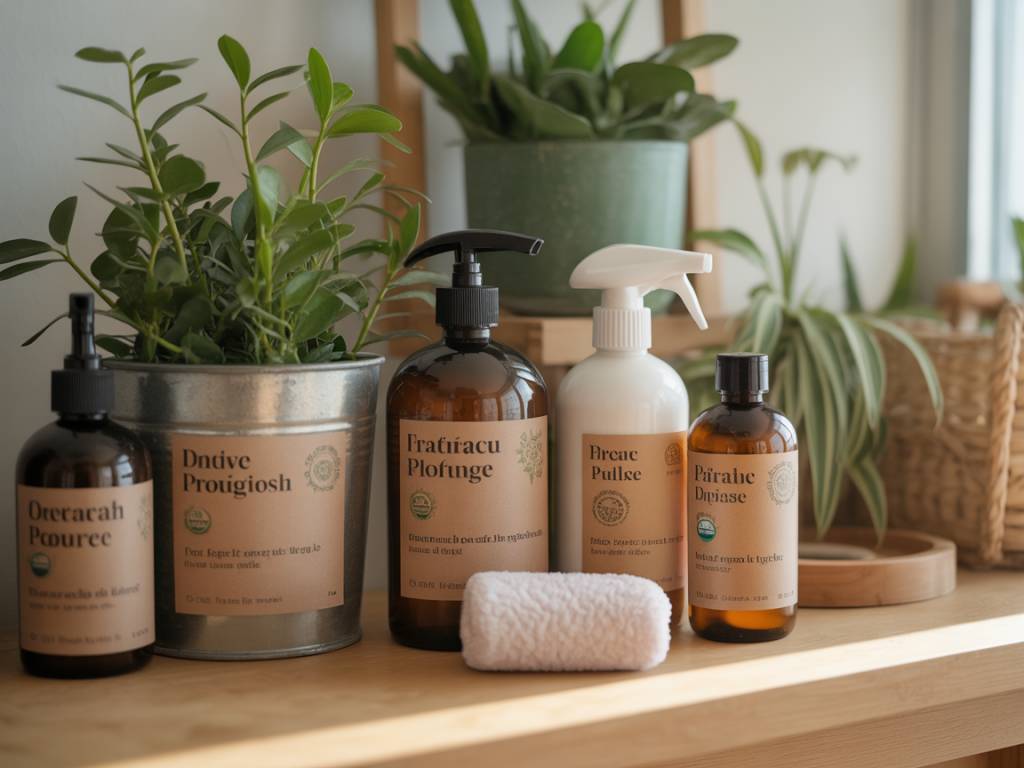
Household and cleaning products: organic and beyond
Sustainable living doesn’t stop at the kitchen door. The products you use to clean your home and wash your clothes also matter.
Check for credible eco-labels
“Organic” is not always the main claim here; look for:
- Eco-certifications (Ecocert, Ecolabel, etc.) that restrict certain chemicals and require biodegradability.
- Fragrance-free or naturally scented products if you’re sensitive to synthetic perfumes.
Simplify your cleaning cupboard
From a sustainable point of view, less is often more. A small set of well-chosen products can replace ten different specialised cleaners:
- Organic or eco-certified multi-purpose cleaner.
- Dishwashing liquid (highly concentrated, in a refillable bottle if possible).
- Simple basics: baking soda, white vinegar, black soap for many surfaces.
Fewer products mean less packaging, less chemical mixing, and a cupboard that no longer attacks you when you open it.
Reading labels efficiently in the aisle (without spending your whole afternoon there)
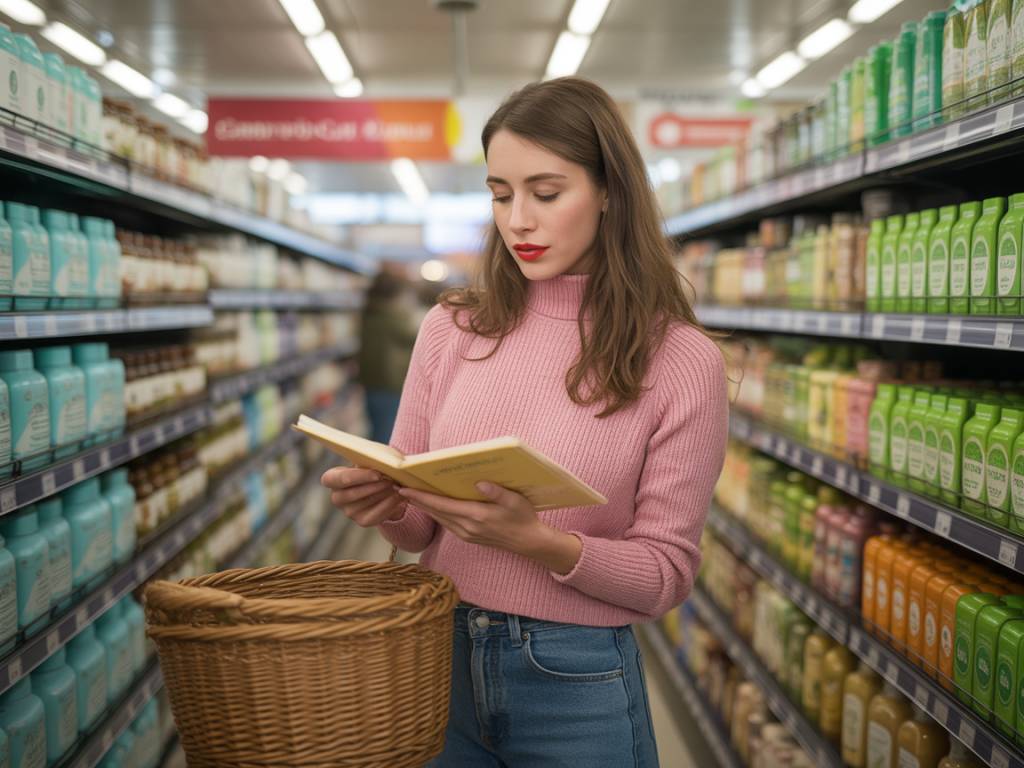
Standing for ten minutes in front of the cereal shelf comparing every logo is not a sustainable habit either. Here’s a quick method I use with clients when we do “guided shopping” sessions.
Step 1: Scan the front quickly
- Identify the organic logo and any additional labels (fair trade, animal welfare, eco-packaging).
- Note the country of origin if visible.
Step 2: Turn the product around
- Look at the ingredients list: the shorter and more recognisable, the better.
- Check for unnecessary additives in simple products (bread, yogurt, tomato sauce).
Step 3: Make a quick comparison
- Compare two or three brands max for the same product type.
- Prioritise: organic + local/European origin + minimal packaging.
Once you’ve chosen “your” brands for staples (pasta, rice, oil, eggs), you won’t need to repeat this every week. Your shopping becomes much faster and calmer.
Maximising your budget: spend where it has the most impact
You don’t need an unlimited budget to build a more sustainable organic cart. Focus your spending where it makes the most difference.
Where it’s most impactful to go organic
- Fruits and vegetables with edible skins or heavily sprayed in conventional farming.
- Eggs and a moderate amount of meat/dairy.
- Pantry staples you eat daily (oats, grains, legumes, oils).
- Tea, coffee, chocolate and spices – ideally organic + fair trade.
Where you can sometimes compromise
- Thick-skinned fruits and veg you peel (onions, bananas, citrus, some squash) – prioritise local and seasonal here.
- Highly processed treats and snacks – better to eat them less often than to pay more for an organic version you eat every day.
Shop smart
- Buy larger packs of dry organic staples you use often (rice, lentils, oats) if you have storage space.
- Take advantage of bulk bins or refill stores for nuts, cereals and cleaning products.
- Use frozen organic vegetables and fruits for out-of-season smoothies, soups and sauces – they’re often cheaper and reduce waste.
Building a more sustainable home, one habit at a time
You don’t have to transform your entire kitchen and bathroom overnight. Sustainable changes work best when they become habits rather than heroic efforts.
To get started, choose one area for the next month:
- Area 1 – Breakfast: switch your everyday items to better options (organic oats, fair trade organic coffee or tea, organic milk or plant drink).
- Area 2 – Cleaning: replace two conventional products with eco-certified alternatives and experiment with a vinegar + baking soda combo for a few tasks.
- Area 3 – Vegetables: commit to buying seasonal veg (organic when it matters most), planning how you’ll use them before the end of the week.
After a few weeks, these changes will feel normal – and you’ll be ready to tackle the next category without feeling overwhelmed.
Choosing organic products that truly respect the planet is less about perfection and more about direction. Each time you pick local and seasonal over imported, whole and simple over ultra-processed, refill and recyclable over over-packaged, you’re voting for a food system and a home that make more sense – for you, and for the planet.