


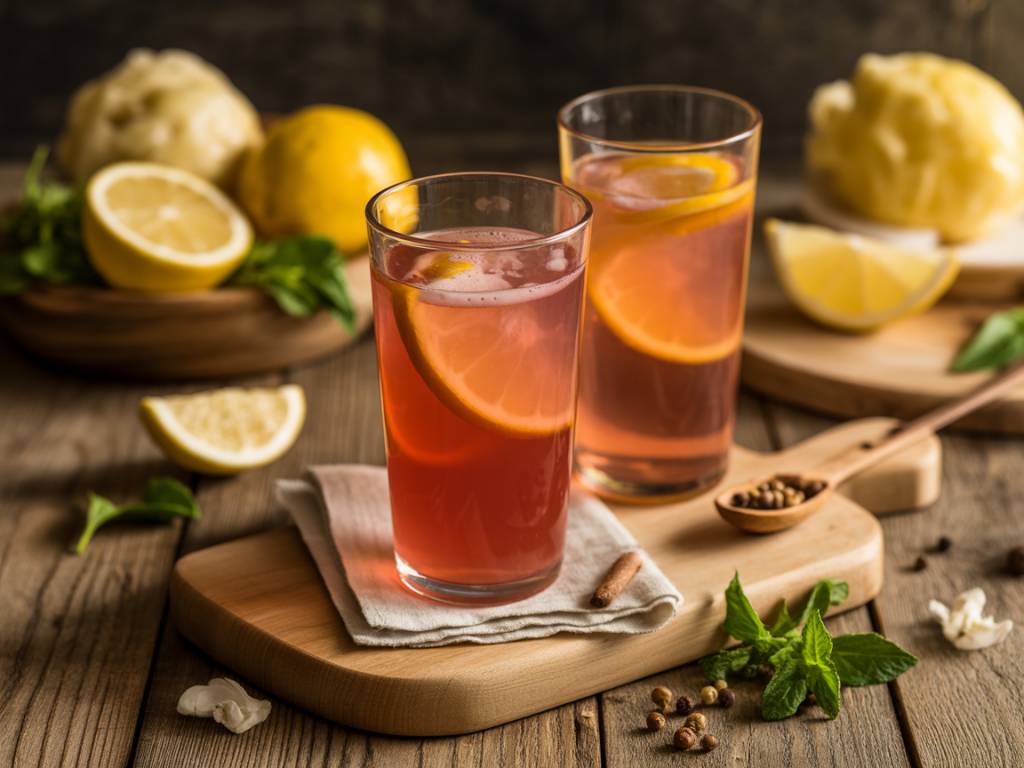
If your digestion is a bit sluggish, your skin is acting up, or you feel heavy after meals, you’re not alone. One of the simplest, most affordable ways I’ve found to support digestion at home is through fermented drinks made with just a handful of organic ingredients. No fancy equipment, no complicated powders – just water, salt, fruit, vegetables and time.
In this article, I’ll walk you through three easy fermented drinks you can make in your own kitchen, how they support digestion, and what to look for when you buy your ingredients. Think of this as your starter kit for homemade probiotic drinks that actually fit into a busy week.
Why fermented drinks help your digestion
When we talk about “fermented drinks”, we’re usually talking about beverages that contain live cultures (beneficial bacteria and yeasts) that can help:
- Rebalance the gut microbiota – more good bacteria, less space for troublemakers.
- Improve digestion of certain foods – some people find less bloating and gas.
- Support regular bowel movements – especially when combined with enough fibre.
- Enhance nutrient absorption – a healthier gut lining is better at absorbing minerals.
Most of the scientific work is on fermented dairy, kombucha and traditional fermented vegetables, but the mechanism is similar: we’re introducing or feeding beneficial microbes that like to live in our digestive system.
Important note: fermented drinks are not magic cures. But used consistently (a small glass daily), they can be a gentle, natural support for digestion and overall gut comfort.
Why choose organic for fermentation?
Because fermentation relies on live cultures, it’s worth being picky about what you’re feeding them with. Organic ingredients make a real difference here.
Here’s why I always recommend organic for homemade ferments:
- Fewer pesticide residues – many pesticides are designed to kill or inhibit microbes. You don’t want that in a jar where you’re trying to grow good bacteria.
- Better conditions for wild fermentation – on unwaxed organic fruits and vegetables, the natural yeasts and bacteria are more abundant and diverse. They’re exactly what you want to kick-start fermentation.
- No synthetic additives – preservatives and certain anti-caking agents can slow or block fermentation.
On your labels, look for:
- In the UK/EU: the green leaf EU organic logo, Soil Association, Ecocert, AB (France).
- Elsewhere: USDA Organic, or a recognised national organic certification body.
When budgets are tight, prioritise organic for:
- Fruits with edible skins (apples, berries, grapes, citrus for zest).
- Root vegetables for kvass (beetroot, carrots).
- Sugar (for water kefir or kombucha) – choose organic cane sugar if possible.
Now, let’s get to the practical side: three fermented drinks you can start this week.
Recipe 1: Simple ginger bug – your base for fizzy, gut-friendly drinks
A ginger bug is a wild starter culture made from ginger, sugar and water. You can use it to ferment homemade “sodas” with fruit juice, herbal tea, or even lightly sweetened herbal infusions. Think of it as your reusable, zero-waste probiotic engine.
You’ll need (for about 300 ml ginger bug):
- 2 tbsp organic ginger root, unpeeled, finely chopped or grated
- 2 tbsp organic cane sugar (white or light brown)
- 250 ml filtered or non-chlorinated water (room temperature)
- A clean glass jar (500 ml capacity is ideal)
- Cheesecloth or a clean tea towel + elastic band
Day 1:
- Add ginger, sugar and water to the jar.
- Stir until the sugar is dissolved.
- Cover with the cloth (to keep dust and insects out, while letting gases escape).
- Leave at room temperature, away from direct sunlight.
Days 2–5: feed your bug
- Every day, add 1 tbsp ginger + 1 tbsp sugar.
- Stir well each time to bring oxygen in.
By day 3–5, you should see bubbles forming, and you’ll smell a slightly yeasty, gingery aroma. That’s your wild yeast at work. If there is no activity after 6–7 days, especially in cold weather, move the jar to a slightly warmer spot (but not above 30°C).
How to use your ginger bug for a fermented drink
Once active, you can turn any lightly sweetened liquid into a probiotic soda:
- Strain 60–80 ml of your ginger bug into a clean 1-litre bottle.
- Add about 750–800 ml of flavoured base:
- Organic apple juice, or
- Herbal tea (e.g. hibiscus, chamomile, mint) with 2–3 tbsp sugar or honey while still warm, cooled before bottling.
- Seal tightly and leave at room temperature for 1–3 days to carbonate.
- “Burp” the bottle once a day by carefully opening it to release pressure, especially in warm weather.
- Once fizzy, transfer to the fridge and enjoy within 1–2 weeks.
Digestive benefits: Ginger is naturally carminative (it helps relieve gas and bloating), and the fermentation adds live cultures. Many people find this kind of drink easier on the stomach than conventional fizzy sodas.
Simple troubleshooting:
- If it smells like nail polish remover or mouldy bread, discard and start again.
- A thin white film (kahm yeast) is usually harmless; skim it off and keep going if there’s no fuzz or bright colours.
- Always use clean utensils and avoid touching the mixture with your fingers.
Recipe 2: Beetroot kvass – earthy tonic for the liver and gut
Beet kvass is a traditional Slavic fermented drink made from beetroots, water and salt. It’s rich in beneficial bacteria, minerals, and compounds that support the liver and bile flow – very helpful for fat digestion.
You’ll need (for about 1 litre):
- 3–4 medium organic beetroots (about 500–600 g)
- 1 litre filtered or non-chlorinated water
- 1 tbsp unrefined sea salt (not iodised, no anti-caking agents if possible)
- Optional: 2–3 slices organic garlic, a few organic black peppercorns, or a small piece of organic ginger
- 1 large glass jar (1.5 litres capacity)
Step-by-step:
- Wash the beetroots thoroughly. Peel if not organic; otherwise just scrub well.
- Cut into cubes of about 2–3 cm. Avoid grating – it ferments too fast and can become alcoholic.
- Place beet cubes into the clean jar, filling it to about 1/2–2/3 full.
- Add your optional flavourings (garlic, pepper, ginger).
- Dissolve the salt in a little warm water, then top up with cool water to make 1 litre.
- Pour the salted water over the beets, leaving a few centimetres at the top.
- Weigh the beets down with a small glass weight or a clean rock in a smaller jar so they stay submerged.
- Cover with a cloth or a loose lid and leave at room temperature (18–24°C is ideal) for 3–5 days.
Start tasting from day 3. When the kvass is pleasantly tangy, earthy and slightly salty, it’s ready. Strain into a bottle and refrigerate.
How to drink it:
- Start with 30–50 ml per day, before meals.
- Gradually increase to a small glass (100–150 ml) if you tolerate it well.
Digestive benefits:
- Traditionally used as a tonic for the liver and gallbladder, which play a key role in fat digestion.
- The lactic acid bacteria from fermentation can support a balanced gut microbiome.
- Beetroot contains fibre and nitrates that may help circulation and overall vitality.
How to reuse the beets:
- For a second batch, refill the jar with salted water using the same beets and ferment 2–3 more days.
- After two batches, chop the beets into a salad or roast them – no waste.
Recipe 3: Quick fermented citrus & mint water – refreshing and light
This is a very gentle, low-sugar ferment with a mild fizz – excellent for people who are sensitive to stronger drinks, or who want something closer to flavoured water than a “soda”.
You’ll need (for about 1 litre):
- 2 organic lemons or limes (because we keep the peel)
- A small handful of fresh organic mint (or lemon balm)
- 1–2 tbsp organic cane sugar or raw honey
- 1 litre filtered or non-chlorinated water
- Optional: 1–2 tbsp active ginger bug or 2 tbsp raw whey (from plain organic yogurt) to speed fermentation
- 1 glass bottle or jar (1.5 litres capacity)
Step-by-step:
- Wash your citrus well. Slice into thin rounds.
- Lightly crush the mint between your fingers to release aroma.
- Add citrus slices and mint to the jar.
- Add sugar or honey and your starter (ginger bug or whey) if using.
- Fill with water, leaving a bit of space at the top.
- Stir, cover loosely and leave at room temperature for 24–48 hours.
You should see small bubbles forming around the citrus slices. When the taste is lightly tangy and just a little sweet, transfer to the fridge. Drink within a week for maximum freshness and live cultures.
Digestive benefits:
- Citrus stimulates digestive juices and can gently support the stomach.
- Mint is traditionally used to ease spasms and discomfort in the digestive tract.
- The mild fermentation adds a light probiotic boost without being too intense.
How much should you drink for optimal digestion?
With fermented drinks, more is not always better, especially at the beginning. Overdoing it can lead to the very symptoms you’re trying to avoid: bloating, gas, even loose stools.
General guidelines:
- Start with 30–50 ml (2–3 tbsp) per day.
- Stay at that level for 3–5 days and see how you feel.
- If everything is fine, gradually increase to 100–150 ml per day.
- Spread your intake out (e.g. 50 ml before lunch and 50 ml before dinner).
Watch how your body responds. A little extra wind or gurgling at first is common, but if you feel genuinely uncomfortable, reduce the quantity or frequency.
People with specific conditions (SIBO, histamine intolerance, very sensitive digestion) should ask a health professional before adding lots of ferments at once. In those cases, the mild citrus & mint water or a well-strained ginger drink may be better tolerated than beet kvass.
Choosing the right equipment and containers
You don’t need special, expensive tools to get started. In my own kitchen, I use what I already have and add one or two pieces as needed.
- Glass jars: 500 ml to 1.5 litre jars with wide mouths are ideal. Reused jars from sauces or pickles work if the lids are in good condition.
- Bottles with tight caps: For fizzy drinks, use swing-top bottles or screw-cap glass bottles. Avoid cheap plastic – it can leach chemicals over time.
- Weights: For kvass, you’ll need to keep solids submerged. You can buy glass fermentation weights or improvise with a smaller jar filled with water.
- Filters: Use clean cheesecloth or old cotton napkins (well washed, no fabric softener) to cover jars while they ferment.
Always wash everything with hot water and a bit of mild, unscented soap, then rinse thoroughly. You don’t need to sterilise like for jam, but cleanliness really matters.
How to fit fermented drinks into a busy routine
Fermentation can sound like “one more thing to manage”, but once you’ve done a couple of batches, it becomes as normal as brewing coffee. The key is to build tiny habits.
Here’s what I suggest to my clients who feel overwhelmed:
- Start with one drink only. For example, make just beet kvass for the first two weeks.
- Link the task to something you already do. “After washing up in the evening, I feed my ginger bug.”
- Batch your preparation. Cut double the amount of beetroot and start two jars at once; you’ll have enough kvass for several weeks.
- Keep a visible reminder. Put your jar on a counter you actually use, not hidden behind cookbooks.
Once you’ve found a rhythm with one drink, add a second type if you want more variety.
Buying guide: simple, organic ingredients that work best
To keep your homemade ferments affordable and efficient, focus on minimal, good-quality basics.
- Ginger: Choose firm, unwrinkled organic ginger. You keep the skin, so organic matters here.
- Beetroots: Look for small to medium roots that feel heavy for their size and have smooth skins. Organic beets often taste sweeter and earthier – ideal for kvass.
- Citrus fruits: Always go organic if you’re using peels. Avoid fruits with thick waxy coatings.
- Sugar: Ferments “eat” sugar; most of it is consumed by microbes. Organic cane sugar works reliably. Avoid artificial sweeteners – they don’t ferment.
- Salt: Use unrefined sea salt or rock salt without additives. Iodised and heavily treated salts can sometimes interfere with fermentation.
- Water: Chlorine can inhibit fermentation. If your tap water is heavily chlorinated, fill a jug and let it sit uncovered overnight, or use a simple filter.
Once you have these basics stocked, you’re essentially “fermentation-ready” any time.
Listening to your body and adjusting
Everyone’s digestion is unique. What feels soothing for one person can be too much for another. The goal with these drinks is to gently support your digestive system, not to force it.
Pay attention to:
- Energy: Do you feel lighter and more comfortable after meals over a few weeks?
- Bloating: Does it reduce, stay the same, or increase?
- Regularity: Many people notice more regular bowel habits after a few weeks of daily ferments.
If a particular drink doesn’t agree with you (for example, beet kvass feels too strong), reduce the quantity, dilute it with water, or switch to a milder option like the citrus & mint water.
The most powerful changes for digestion usually come from small, consistent habits rather than big, heroic efforts. A little glass of something alive, every day, made from a few honest organic ingredients in your own kitchen – that’s often enough to start shifting things in the right direction.