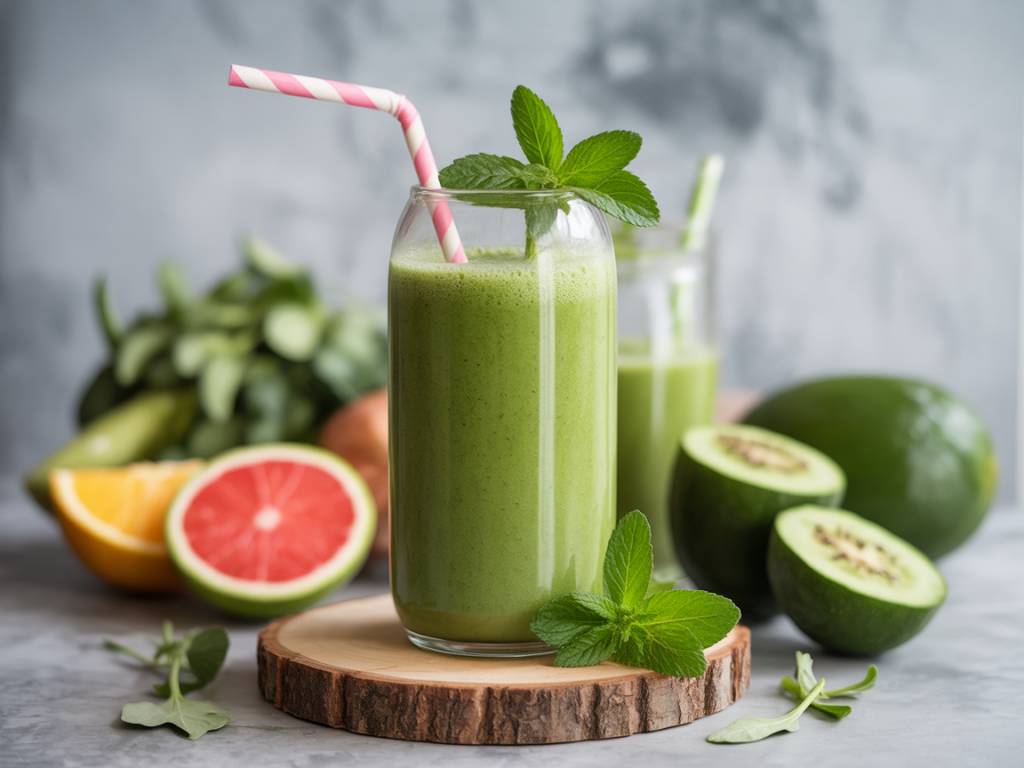
There are two kinds of green smoothies. The first type: a sad, beige-green sludge you promise you’ll “get used to” (and quietly abandon three days later). The second: bright, fresh, creamy, and genuinely something you look forward to drinking.
The difference between the two? Ingredients and a bit of method.
In this article, we’ll look at how to build energising green smoothies with seasonal organic produce. I’ll share flavour combinations by season, a simple “green smoothie formula” you can use all year round, plus practical tips on choosing organic, storing ingredients and avoiding waste.
Why a green smoothie in the morning actually works
Let’s be clear: a green smoothie isn’t a magic detox potion, but it can be a very efficient way to load your morning with fibre, vitamins and good fats in under 5 minutes.
When it’s well built, you get:
- Stable energy – thanks to fibre, protein and fats, your blood sugar rises plus doucement, so you avoid the 11 a.m. crash.
- Extra servings of veg – especially leafy greens you might not eat otherwise at breakfast.
- Hydration – from water-rich fruits and veggies, especially if you struggle to drink plain water early in the day.
- Support for digestion – fibre feeds your gut microbiota and helps regulate transit.
The trick is to think of your smoothie as a balanced mini-meal, not a fruit juice. That’s where seasonal organic produce makes a big difference.
Why seasonal and organic matter in your blender
Green smoothies are concentrated: you’re drinking the equivalent of a small salad bowl in a glass. If that base is made with tired, out-of-season, conventionally grown produce, you’re not getting the best in either flavour or nutrients.
Here’s why I favour seasonal organic ingredients when I test recipes for the blog – and in my own breakfast routine:
- More flavour, less effort
A ripe organic pear in October has so much natural sweetness you don’t need added sugar, dates or syrups. Same glass, fewer ingredients. - Better nutrient density
Leafy greens lose vitamins quickly after harvest. Seasonal usually means shorter supply chains and fresher produce. If you can buy from a local organic farm, even better. - Less pesticide residue
When you blend spinach, kale or celery, you consume the whole plant. Choosing certified organic (EU organic logo or trusted national labels) helps reduce your exposure to synthetic pesticides, especially on thin-skinned produce. - Lower footprint
Importing spinach or mangoes across the globe for a “healthy” smoothie every morning has a cost. Building your recipes around what actually grows near you each season is one of the simplest sustainable switches.
Look for clear labels like “Organic” accompanied by a certification logo (not just “natural” or “farm style”). On frozen fruits and greens, the same rule applies: certified organic first, “additive-free” as a bonus.
The basic green smoothie formula (no recipe needed)
Once you understand the base structure, you can improvise with whatever is in season or in your fridge. I use this formula daily when I’m recipe-testing or just trying to use up scraps.
Think in terms of 5 building blocks:
- 1–2 cups leafy greens (spinach, kale, romaine, chard, beet greens, herbs)
- 1 cup fruit for sweetness and flavour (fresh or frozen)
- ½–1 cup liquid (water, plant milk, milk, coconut water, cold herbal tea)
- Protein or healthy fat (2 tbsp seeds or nuts, 1–2 tbsp nut butter, ½ cup yoghurt, tofu)
- Boosters (optional) – ginger, cinnamon, cocoa, oats, flax, etc.
As a starting point, for one large glass (about 400–500 ml):
- 1 heaped cup loosely packed greens
- 1 medium fruit (banana, pear, apple, peach, etc.) or 1 cup mixed fruits
- ¾ cup liquid
- 2–3 tablespoons nuts, seeds or oats (or ½ cup yoghurt)
Blend until smooth, then adjust: more liquid if it’s too thick, a squeeze of lemon if it’s too sweet, an extra leaf or two if you barely taste the greens.
Spring: light, cleansing greens to wake you up
In spring, your body often craves lighter foods after heavier winter dishes. The markets fill up with tender greens, herbs and the first berries. Perfect timing.
What’s in season (roughly March–May, depending on your region):
- Leafy greens: spinach, young kale, chard, rocket, lettuce, beet greens
- Herbs: parsley, mint, coriander
- Fruits: early strawberries, rhubarb (best cooked), apples, pears, citrus still around
Spring “Garden Wake-Up” Smoothie
- 1 cup organic baby spinach
- ½ cup chopped organic cucumber
- 1 small organic apple or pear, cored
- ½ lemon, peeled (or juice only)
- 6–8 fresh mint leaves
- ¾ cup cold water or light plant milk
- 2 tbsp hulled hemp seeds or 2 tbsp plain yoghurt
Blend the greens and liquid first for 20–30 seconds, then add the rest. This “two-step” blending gives a smoother texture, especially if your blender isn’t very powerful.
Why it works in the morning: cucumber and lemon are refreshing and hydrating, mint wakes up your palate, and hemp seeds add protein to keep you full.
Summer: fruity, refreshing, almost like dessert
In summer, the risk with smoothies is turning them into fruit bombs that spike your blood sugar. The good news is that seasonal fruits are so sweet you can reduce quantity and let herbs and greens do their job.
What’s in season (June–August):
- Leafy greens: chard, kale, lettuce, beet greens, fresh herbs
- Fruits: berries, peaches, nectarines, apricots, melons, plums, cherries
- Extra: courgette (zucchini), cucumber – both brilliant in smoothies
Summer “Green Piña Colada” Smoothie
- 1 cup organic kale (stems removed) or chard
- ½ cup chopped organic courgette (no need to peel if organic)
- ½ cup fresh or frozen organic pineapple
- ½ small banana (frozen if possible, for creaminess)
- ¾ cup coconut milk drink (the light version, from the carton, not the thick canned one)
- 2 tbsp shredded coconut or 2 tbsp cashews (soaked if you have time)
Blend until very smooth. If your blender struggles with kale, swap it for baby spinach the first few times.
Tip: blend courgette or cucumber into almost any summer smoothie. They add volume, fibre and hydration with a very mild taste – perfect when you’re serving green smoothies to sceptical family members.
Autumn: cosy, grounding greens with a touch of spice
Autumn is when I see many readers shift back to warm porridge and abandon smoothies because “it feels too cold”. The solution is not to give up, but to adjust ingredients and temperature.
Think thicker, creamier textures, room-temperature ingredients and warm spices.
What’s in season (September–November):
- Leafy greens: kale, chard, spinach, cabbage family greens
- Fruits: apples, pears, grapes, late plums, figs
- Extras: celery, beetroot leaves, carrots (lightly steamed and cooled if your digestion is sensitive)
Autumn “Apple Pie Green Smoothie”
- 1 cup organic spinach or mild kale
- 1 small organic apple, cored (leave the skin if organic)
- ½ small pear for extra sweetness
- 3 tbsp organic oats (quick oats blend more easily)
- ¾ cup oat milk or almond milk
- ¼ tsp cinnamon + a pinch of nutmeg
- 1 tbsp almond butter or 2 tbsp ground flaxseeds
Use room-temperature ingredients, skip the ice and let the oats sit in the liquid for 5 minutes before blending if you like a thicker, more porridge-like consistency.
Why it works: oats and almond butter slow down sugar absorption and make the smoothie more satisfying, while spices give that cosy autumn flavour without extra sugar.
Winter: sturdy greens, citrus and store-cupboard tricks
In winter, fresh local fruit options narrow, but you still have great allies: citrus, sturdy greens, and your freezer.
What’s in season (December–February):
- Leafy greens: kale, cabbages, winter lettuces, chard
- Fruits: oranges, clementines, grapefruit, apples, pears, kiwi (often imported but still seasonal in many regions)
- Extras: carrots, beetroot, frozen berries and greens from earlier in the year
Winter “Citrus Boost” Green Smoothie
- 1 cup chopped organic kale (blanch 30 seconds in boiling water then cool if you find raw kale hard to digest)
- 1 orange, peeled and deseeded
- ½ banana or ½ cup frozen mango
- ½ cup plain yoghurt (dairy or soy) for creaminess and protein
- ½ cup water
- 1 small piece fresh ginger (about 1 cm), peeled
Blend well, taste and add a spoonful of honey or date syrup only if really needed. Often the orange and banana are enough.
Freezer tip: when citrus is very cheap and abundant, zest a few organic fruits and freeze the zest in ice cube trays with a bit of water. Add a cube to winter smoothies for flavour and a vitamin C boost.
How to choose and store organic produce for smoothies
Sometimes the difference between “I love my morning smoothie” and “I never have time for this” is pure logistics: what you buy, how you store it and how quickly you can get everything into the blender.
At the shop or market, prioritise:
- Organic for thin skins and leafy greens: spinach, kale, celery, apples, pears, berries, grapes.
- Local over exotic, when possible: a ripe local pear beats a hard, flown-in mango in both flavour and footprint.
- Frozen organic fruits and greens as staples: they’re picked at peak ripeness and often cheaper. Check that the ingredient list only contains the fruit/veg, with no added sugar or sauces.
At home, to save time in the morning:
- Wash and thoroughly dry greens when you get home, then store them in an airtight box with a clean tea towel to absorb moisture.
- Prep “smoothie packs”: small freezer bags or boxes with pre-portioned fruit and greens. In the morning, you just add liquid and your protein/fat.
- Keep a visible “smoothie basket” in the fridge with all the small add-ins: ginger, lemons, nut butters, seeds. The less you have to hunt, the more likely you are to actually blend.
Make your green smoothie more filling (without overloading on sugar)
If your smoothie leaves you hungry at 10 a.m., check these three points:
- Protein: include at least one solid source – yoghurt, silken tofu, hemp seeds, pumpkin seeds, nut butter or a clean protein powder if you use one.
- Fats: 1–2 tablespoons of chia, flax, nuts or seeds help satiety and support vitamin absorption from the greens.
- Fruit quantity: too much fruit gives a fast sugar hit that drops quickly. Aim for 1–1.5 servings of fruit, not 3–4.
A simple tweak I often suggest during workshops: if you usually use 1 banana and 1 cup of berries, try ½ banana + ½ cup berries and add 2 tablespoons oats + 1 tablespoon nut butter. Most people feel the difference by mid-morning.
Common green smoothie mistakes (and quick fixes)
You’ve maybe tried green smoothies before and given up. Before you write them off forever, check if one of these issues sounds familiar:
- “It tastes too bitter”
Likely culprits: too much kale or rocket, or unripe fruit. Fix it by:- Switching to milder greens (spinach, romaine, young chard)
- Balancing with acidic elements (lemon, lime, orange) and a small amount of sweet fruit
- “It’s a weird brown colour”
Mixing red and green can give muddy tones. It’s still nutritious, but less appetising. Fix it by:- Pairing greens with yellow/green fruits (apple, pear, pineapple, mango) for a bright green
- Or going fully red/purple (beetroot + berries) and skipping the greens that dull the colour
- “I get bloated afterwards”
Possible reasons: too much raw cruciferous veg (kale, cabbage), drinking too fast, or lots of added powders. Fix it by:- Starting with small portions of greens (½ cup) and increasing gradually
- Blanching tougher greens for 30 seconds, or using lettuce/spinach instead
- Sipping slowly; it’s still food, not water
Building a realistic morning habit
The goal isn’t to drink a green smoothie every single day for the rest of your life. It’s to have a simple tool you can lean on when mornings are busy and you want something nourishing, fast.
To make it stick without effort:
- Pick 1–2 “house recipes” per season you truly enjoy, and keep those ingredients on your regular shopping list.
- Keep your blender accessible – if it’s buried at the back of a cupboard, you won’t use it.
- Prep once, enjoy twice: when you’re already cutting fruit or washing greens, prep an extra portion and freeze it for another morning.
And if some days you’d rather have toast or porridge, that’s fine. Your green smoothie habit doesn’t have to be all or nothing to make a difference.
If you try one of the seasonal ideas above, adapt it to what you find at your local organic shop or market – and don’t hesitate to swap ingredients. The best green smoothie is the one that fits your taste, your schedule, and the season you’re in.