Some days, packing a school lunch feels like a test you didn’t revise for: it has to be balanced, organic, quick to prepare… and your child actually has to eat it. If you’re tired of beautifully packed boxes coming home half-full, this article is for you.
Let’s look at how to build genuinely balanced organic lunchboxes that work in real life: simple ingredients, smart prep, and combinations kids will happily finish.
What does a balanced organic lunchbox really look like?
Before we talk ideas, it helps to know what we’re aiming for. A balanced lunch for a school day generally includes:
- Slow-release carbs for energy (wholegrain bread, brown rice, oats, potatoes)
- Quality protein for growth and satiety (eggs, beans, lentils, poultry, tofu, cheese, yogurt)
- Good fats for brain and hormones (nuts, seeds, olive oil, avocado, oily fish)
- Fruit and veg for fibre, vitamins and minerals
- Hydration (preferably water, sometimes herbal/fruit infusions)
With organic, the idea is the same, but we pay extra attention to:
- How the food is grown: fewer pesticide residues, better soil health
- How animals are raised: more space, better welfare
- Additives: organic processed foods tend to have shorter, cleaner ingredient lists
For a lunchbox that gets eaten, remember one simple rule: familiar structure, slightly upgraded ingredients. Keep the overall format (sandwich + fruit + snack), and improve what’s inside step by step.
Organic choices that make the biggest difference
Going 100% organic overnight isn’t always realistic. If you’re working with a budget, focus on the items where organic tends to have the most impact for kids.
- Fruit with edible skin: apples, pears, berries, grapes. Kids eat the peel, so fewer synthetic pesticide residues is a plus.
- Leafy greens and salad: spinach, lettuce, rocket, cucumber. These are often more intensively treated in conventional farming.
- Dairy products: yogurt, milk, cheese. Organic standards usually mean better animal feed, more pasture, and fewer routine antibiotics.
- Eggs: organic eggs come from hens with outdoor access and organic feed. Nutritionally, they often have slightly better fat profiles.
- Wholegrains: oats, wholemeal flour, brown rice. The outer layers of grains can hold more residues; going organic here is a smart move.
When shopping, look for clear organic labels (Soil Association, EU organic leaf, USDA Organic, or your local trusted certification). If a product uses the word “natural” but has a long ingredient list and no official logo, treat it as marketing, not a guarantee.
Easy lunchbox formula: mix and match
Instead of reinventing the wheel every morning, use a simple formula you can repeat:
- 1 main (carbs + protein)
- 2 sides (1 fruit, 1 veg)
- 1 snack (healthy “treat”)
- 1 drink (water, sometimes an infusion)
Once you have this structure, you just plug in ingredients you have on hand. Here are some kid-tested organic mains that are quick to prepare and travel well.
5 balanced organic mains kids actually eat
All of these are designed to be prepared in 10–15 minutes, often using leftovers.
Soft wholegrain wraps with hidden veg hummus
What you need (organic if possible):
- Wholegrain tortilla wrap
- Hummus (shop-bought organic or homemade)
- Grated carrot or courgette
- Cucumber sticks or thin slices
- Optional: organic cheese strips or leftover roast chicken
How to prep:
- Spread a generous layer of hummus over the wrap.
- Scatter grated veg (squeeze lightly in a tea towel first if very watery).
- Add cheese or chicken if using.
- Roll tightly, then slice into “snail” spirals.
Why kids eat it: it looks fun, the hummus smooths out the texture, and the veg is finely grated, not in big scary chunks.
Mini organic pasta salad pots
What you need:
- Small pasta shapes (fusilli, farfalle, shells), ideally wholewheat
- Cherry tomatoes, halved
- Sweetcorn (frozen or canned, drained)
- Peas (optional)
- Olive oil + a squeeze of lemon or mild vinegar
- Grated cheese or cubes of mozzarella
How to prep:
- Cook extra pasta at dinner and set aside a portion for lunchboxes.
- Toss pasta with olive oil, lemon, veg and cheese.
- Season lightly with salt and pepper (if your child accepts it).
Tip: keep the veg soft but not mushy; very firm veg is often rejected by younger kids.
Egg muffin bites
These are little baked omelettes you can batch cook and freeze.
What you need:
- Eggs (organic if possible)
- Finely chopped veg (spinach, peppers, mushrooms, grated courgette)
- Grated cheese
- A splash of milk
How to prep:
- Preheat oven to 180°C and grease a muffin tray or use silicone cases.
- Whisk eggs with milk, stir in veg and cheese.
- Pour into cases and bake 12–15 minutes until set.
- Cool completely before packing in the lunchbox.
Why they work: they’re finger food, easy to hold, and taste good cold. Perfect with some wholegrain crackers or a small roll.
Leftover roast chicken & veggie rice
What you need:
- Cooked brown or white rice (from dinner)
- Leftover roast chicken, shredded
- Frozen peas
- A drizzle of olive oil or a knob of butter
How to prep:
- Warm rice, peas and chicken together in a pan with oil/butter.
- Season lightly, then cool quickly and refrigerate.
- Pack in a thermos if your child prefers it warm, or in a box to eat at room temperature.
Tip: mixing the peas in while warm softens them and makes them sweeter, which most children prefer.
DIY “bento” snack box
Some kids eat better when they can choose from small portions instead of facing one big sandwich.
Ideas to include:
- Wholegrain crackers or mini pitta
- Cheese cubes or organic cream cheese
- Boiled egg, halved
- Carrot sticks, cherry tomatoes, cucumber slices
- A handful of chickpeas or edamame beans
This format is great for picky eaters: plenty of variety, nothing too overwhelming, and they can decide what to eat first.
Smart organic sides: fruit and veg that travel well
Not all produce survives a school bag in the same way. Here are reliable options that hold up and are usually well accepted.
Fruit ideas:
- Apple or pear slices brushed with lemon water to prevent browning
- Grapes cut in halves (for younger kids, always cut lengthwise for safety)
- Seasonal berries in a small lidded pot
- Mandarin or clementine segments, peeled in advance
- Banana with a quick knife mark on the skin to show they’re “allowed” to open it
Veg ideas:
- Carrot sticks or coins
- Cucumber rounds or sticks
- Cherry tomatoes, halved for small children
- Steamed then chilled green beans (lightly salted)
- Roasted vegetable cubes (sweet potato, butternut squash, beetroot)
If you’re introducing a new veg, pair it with a familiar dip: organic hummus, natural yogurt with herbs, or a simple olive oil and lemon dressing in a tiny container.
Healthy organic snacks that feel like treats
Kids talk in the playground. If everybody else has biscuits and you’ve packed plain carrot sticks, you can guess the result. The trick is to offer better treats, not no treats.
Ideas that work well:
- Organic yogurt pouches or small pots (look for low sugar, ideally <10 g per 100 g)
- Homemade oat bars with organic oats, seeds and dried fruit (sweetened with mashed banana or a bit of honey for older kids)
- A few squares of good quality dark chocolate with nuts or seeds
- Organic popcorn made at home with a little olive oil and salt
- Rice cakes with nut butter (or seed butter if nuts are banned at school)
When buying packaged organic snacks, check the label: organic doesn’t mean low in sugar. Aim for short ingredient lists you recognise.
Time-saving prep strategy for busy weeks
Nobody wants to start from zero at 7:30 am. A small amount of planning removes the morning stress.
On the weekend or one quiet evening:
- Cook extra grains: brown rice, quinoa or pasta. Store in airtight boxes for 3–4 days.
- Boil 6–8 eggs. Keep them in their shells in the fridge and peel in the morning.
- Wash and slice veg that keep well (carrot, cucumber, peppers). Store in jars of water or boxes.
- Bake a tray of egg muffins or oat bars and freeze portions.
- Pre-portion snacks (nuts, dried fruit, popcorn) into small containers.
On school mornings:
- Choose one main from your list of “family favourites”.
- Add 1 fruit + 1 veg from the prep you’ve already done.
- Grab one snack container and a filled water bottle.
- Let your child add a small personal choice (choosing between two fruits, or between popcorn and a yogurt, for example).
That final element of choice gives them ownership, which often increases the chances the lunch will be eaten.
How to gently shift from ultra-processed to organic
If your child is used to classic supermarket snacks and white bread, moving straight to lentil salads and wholemeal everything may backfire. Go gradually.
Some realistic swaps:
- White sandwich bread → half-and-half loaf (mix of white and wholemeal), then later full wholemeal
- Flavoured yogurts → plain organic yogurt + a teaspoon of jam or fruit compote you control
- Sweetened cereal bars → homemade oat bars or organic bars with less sugar
- Processed cheese slices → real organic cheddar slices or fresh cheese
Keep the format the same (sandwich, “yogurt”, “bar”) so it feels familiar. Change one element at a time, and give their taste buds space to adapt.
Making the lunchbox appealing (without spending hours)
You don’t need to carve animals out of radishes. A few simple tricks can make a big difference:
- Colour: aim for at least three colours in the box (e.g. red tomatoes, orange carrots, green cucumber).
- Shape: cut sandwiches into rectangles or triangles; use small cookie cutters for cheese or cucumber slices.
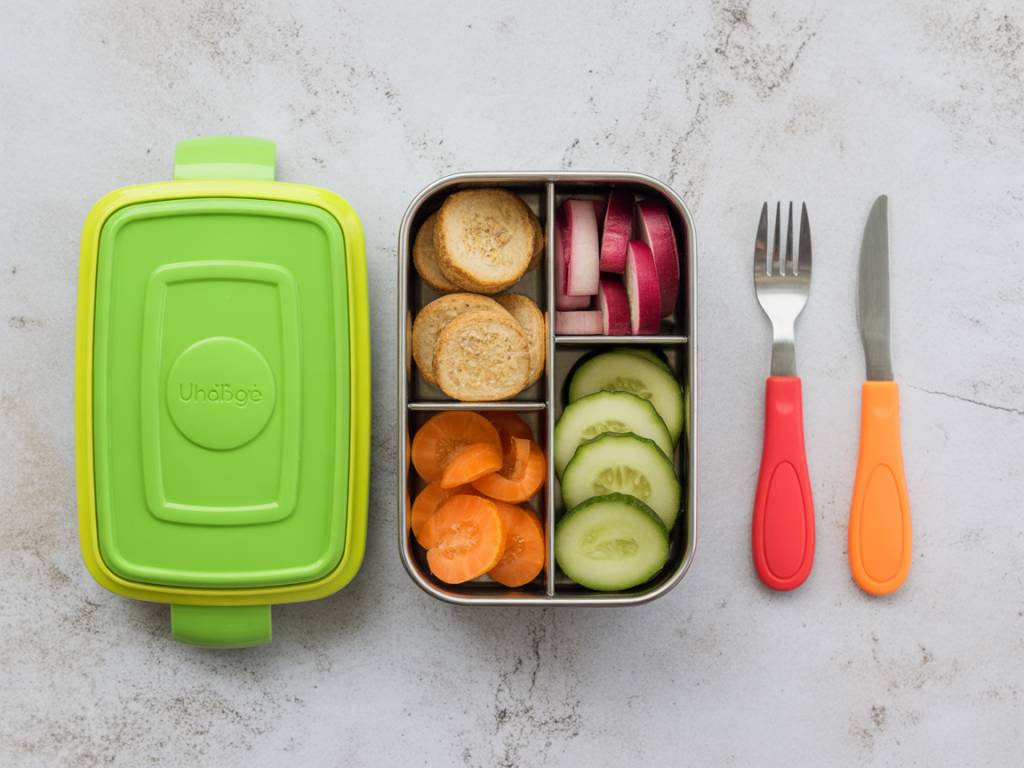
- Compartments: a bento-style box with sections helps food look varied and less “mushed together”.
- Skewers: use small reusable picks to thread cubes of cheese, tomatoes and cucumber. Kids love “mini kebabs”.
- Notes: occasionally slip in a small message or a doodle; it turns an ordinary lunch into a moment of connection.
Safety and storage basics you shouldn’t skip
Organic or not, food needs to stay safe until lunchtime.
- Use an insulated lunch bag and, for perishable foods (dairy, meat, fish, eggs), add a small ice pack.
- Cool cooked foods completely before closing the box, to avoid condensation and bacterial growth.
- Explain to your child which items should be eaten first (e.g. yogurt before crackers).
- Wash fruit and veg thoroughly, even when it’s organic.
If the lunchbox comes home with leftovers, trust your senses: if something smells off or has been at room temperature all day and is very perishable (e.g. yogurt, mayo-based salads), don’t keep it.
Involving kids so lunches stop coming back full
The best lunchbox is the one your child helped to create. Even young children can participate:
- At the shop, let them choose between two organic fruits or two types of bread.
- At home, ask: “Do you want pasta salad or wraps tomorrow?” – both options are acceptable to you.
- Invite them to assemble their own snack box from prepped ingredients.
For older kids, be transparent: explain why you’re choosing more organic and fewer ultra-processed foods. Kids are more likely to cooperate when they understand that it’s not just a random rule, but about their energy, focus, and long-term health.
Start small. Choose one or two ideas from this article to try next week, rather than changing everything. Over time, these organic, balanced, easy-to-eat lunches become the new normal – for you, and for your child.