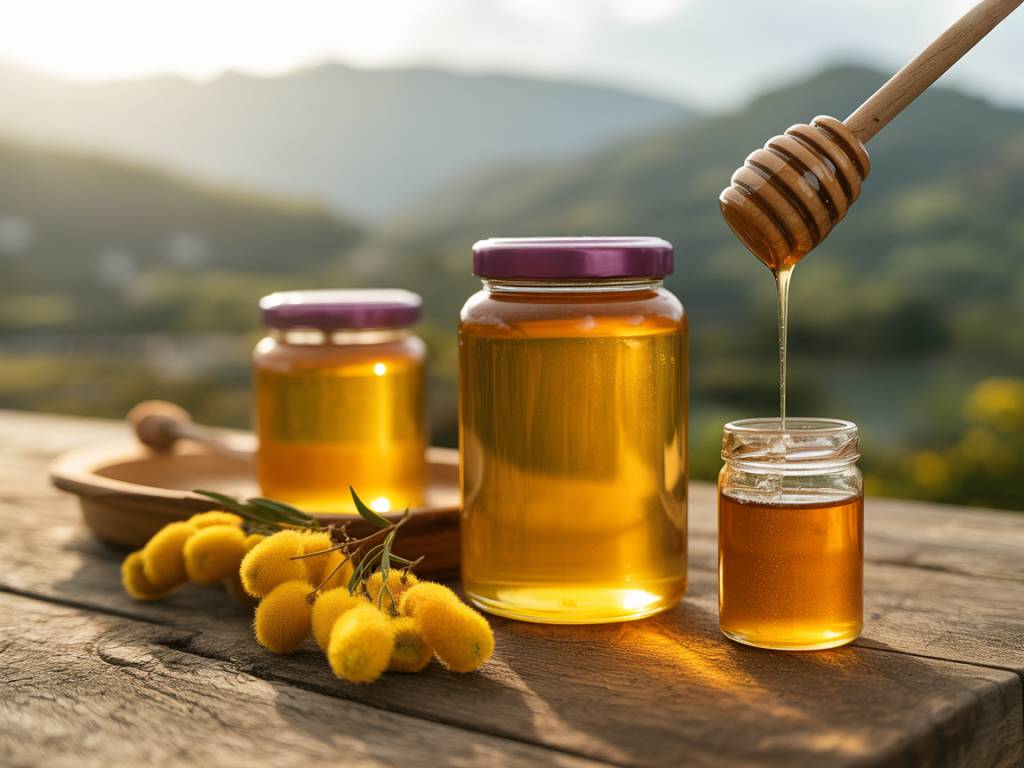
What Makes Acacia Honey So Special?
If you’ve ever wondered why acacia honey is often more expensive than your regular squeezy bottle from the supermarket, you’re not alone. Pale, almost transparent, very slow to crystallise and with a delicate floral flavour, acacia honey has become a favourite for anyone who wants a gentle sweetness that doesn’t overpower food.
But beyond the taste, is it really different from other honeys? And what should you look for if you care about nutrition, bees, and responsible sourcing?
Let’s unpack acacia honey from three angles you can actually use in everyday life: flavour in the kitchen, nutrients and health, and how to buy it in a way that supports both the environment and honest producers.
Flavour Profile: How to Use Acacia Honey in Everyday Cooking
Acacia honey is produced mainly from the nectar of the black locust tree (Robinia pseudoacacia), commonly called acacia in the honey world. This tree gives the honey its very delicate taste and unusually clear colour.
What does acacia honey taste like?
- Mild and floral, with light vanilla notes
- Very low acidity compared with many wildflower or forest honeys
- Clean sweetness that doesn’t hang in the mouth
If you find some honeys “too strong” or “too animal” (it’s a frequent comment with chestnut or heather honey), acacia honey is the opposite: soft, subtle and very easy to pair.
When is acacia honey a better choice than other honeys?
I reach for acacia honey whenever I want sweetness without a dominant honey flavour. For example:
- In drinks – It dissolves easily in hot or cold liquids and doesn’t clash with:
- Green tea or white tea
- Delicate herbal infusions (chamomile, linden, lemon balm)
- Homemade lemonade or infused waters
- On dairy – Perfect where strong honey would “take over”:
- Plain yoghurt or skyr
- Fromage blanc or ricotta with fruit
- Mascarpone cream for simple desserts
- In baking – Best for recipes where you don’t want the honey to change the flavour profile too much:
- Light cakes and sponges
- Granola or muesli bars
- Bircher muesli or overnight oats
- With fresh fruit – It enhances rather than masks:
- Berry salads with mint
- Roasted apricots or peaches
- Sliced pears with a few crushed nuts
A very handy feature: it stays liquid for a long time
Acacia honey is naturally high in fructose and relatively low in glucose, which means:
- It crystallises much more slowly than many other honeys
- You can keep it in a squeeze bottle without it becoming grainy
- It’s ideal for:
- Drizzling over pancakes, porridge, or toast
- Mixing into salad dressings and marinades
- Sweetening drinks without needing to reheat or melt it
Simple everyday ways to use acacia honey
- Breakfast: Stir 1–2 teaspoons into natural yoghurt, add oats, a chopped apple and a handful of nuts for a 3-minute, no-excuse weekday breakfast.
- Snack: Spread wholegrain toast with peanut or almond butter and drizzle a little acacia honey on top instead of jam.
- Quick dessert: Bake halved pears (15–20 minutes at 180°C), then serve warm with a spoonful of ricotta or Greek yoghurt and a thin drizzle of acacia honey.
- Salad dressing: Whisk together 3 parts olive oil, 1 part lemon juice or cider vinegar, 1 teaspoon acacia honey, salt and pepper. Works with green salads, grain salads, and roasted veg.
What’s Inside: Nutrients and Health Benefits
All raw, quality honey is more than “just sugar”. Acacia honey is no exception: it brings trace nutrients, bioactive compounds and some interesting properties, even if it’s not a miracle food.
Macronutrients: yes, it’s sugar – but not exactly like table sugar
- About 80 g of carbohydrates per 100 g, mainly:
- Fructose (predominant)
- Glucose
- Around 300 kcal per 100 g
- Virtually no fat or protein
Compared with white sugar, acacia honey has:
- A slightly lower glycaemic index (often quoted around 30–35, vs. ~60–70 for table sugar), thanks to the higher fructose content
- A bit more “sweetness per gram”, meaning you can often use less for the same perceived sweetness
That said, it’s still a concentrated source of sugars. For blood sugar balance, think “small amounts, well used”, rather than “free pass because it’s natural”.
Micronutrients: modest, but better than zero
Like other raw honeys, acacia honey contains trace amounts of:
- Minerals: potassium, calcium, magnesium, a bit of iron
- Vitamins: mainly B-group vitamins in tiny quantities
These aren’t high enough to cover your daily needs, but they’re still more than what you get from refined white sugar, which offers energy and nothing else.
Antioxidants and plant compounds
Acacia honey is generally lighter in colour, and lighter honeys tend to have slightly lower antioxidant levels than very dark honeys (like buckwheat or chestnut). Still, it does contain:
- Flavonoids (plant antioxidants)
- Phenolic acids
- Enzymes produced by bees (like glucose oxidase)
These compounds are associated in the scientific literature with:
- Antioxidant effects – helping to combat oxidative stress
- Mild anti-inflammatory effects in laboratory studies
- Antibacterial properties, especially when used topically
One practical takeaway: if you want to preserve these fragile compounds, avoid boiling your honey. Stir it into warm tea that’s cooled for a minute or two, or add it at the end of cooking, off the heat.
Blood sugar and energy
Because of its high fructose content and lower glycaemic index, acacia honey is sometimes preferred by people who are monitoring their blood sugar. However:
- It’s not suitable for people with fructose intolerance
- Anyone with diabetes should treat it like any other concentrated sugar, in consultation with their healthcare provider
For most healthy people, a teaspoon or two used to sweeten a real food (yoghurt, oats, fruit, nuts) is totally compatible with a balanced diet.
Digestive comfort
Acacia honey is often described as “gentle on the stomach” because of its mild acidity and composition. Some people find they tolerate it better than very dark, stronger honeys. It also contains small amounts of prebiotic compounds that can support beneficial gut bacteria, though not at therapeutic levels on their own.
Raw vs. pasteurised acacia honey: what to choose?
On the label, you’ll sometimes see:
- “Raw” or “unpasteurised” honey: usually:
- Lightly filtered
- Not heat-treated at high temperatures
- Better preserved enzymes and bioactive compounds
- Pasteurised or “processed” honey:
- Heated to make it more fluid and stable
- Often ultra-filtered to delay crystallisation
- Can lose part of its natural enzymatic activity
For everyday use, I systematically recommend a raw acacia honey sourced from a trusted beekeeper or brand, especially if you’re choosing honey for more than just its sweetness.
Important safety note: never give honey, acacia or otherwise, to children under one year old because of the risk of infant botulism.
Responsible Sourcing: How to Choose Acacia Honey That Respects Bees and Forests
Behind every jar of honey, there are real landscapes, beekeepers and of course bees. Acacia honey is particularly sensitive to weather conditions and blossom timing, which makes it both precious and sometimes tricky to produce.
Where does acacia honey come from?
The black locust tree (our “acacia”) grows in many parts of Europe (notably Hungary, Romania, Italy, France), as well as parts of Asia and North America. The best acacia honeys are very consistent from year to year: pale, almost transparent, with that recognisable delicate taste. But yields vary hugely depending on:
- Spring weather (late frosts can destroy the blossoms)
- Rain during flowering (bees fly less in bad weather)
- Health and density of bee colonies
This is one reason why genuine acacia honey can be significantly more expensive than a standard “blend of EU and non-EU honeys” on the supermarket shelf.
How to read the label intelligently
When you’re standing in front of the honey aisle, look for:
- Floral origin:
- Should clearly say “acacia honey” or “honey from acacia blossom”
- Not just “honey” or “mixed floral honey” if you really want acacia’s specific properties
- Geographical origin:
- Look for a precise country: “Product of France”, “Product of Hungary”, etc.
- Be cautious with very vague mentions like “Blend of EU and non-EU honeys”, which can hide long-distance blends and lower transparency
- Processing:
- Mentions like “raw”, “unpasteurised”, “cold extracted” are good signs
- A very liquid honey that never crystallises and is extremely cheap can be a red flag for overprocessing or even adulteration
- Organic certification:
- EU organic or national organic labels mean:
- No synthetic pesticides used on the land where bees forage (within defined radiuses)
- More stringent rules on hive treatments
- Organic doesn’t automatically guarantee respectful beekeeping, but it’s a useful first filter
- EU organic or national organic labels mean:
Why “cheap honey” is almost always a bad idea
Serious investigations over the past years have repeatedly highlighted issues such as:
- Honey cut with sugar syrups (rice, corn, etc.)
- Overheating and over-filtering to standardise texture and delay crystallisation
- Long, complex supply chains where traceability is minimal
When honey is sold at prices that don’t even cover the work of managing hives, feeding bees in winter and dealing with losses, someone is paying the price – usually the bees and the honest beekeepers.
How to support sustainable acacia honey production
Some concrete ways to align your jar with your values:
- Buy from small or regional beekeepers when you can:
- At farmers’ markets
- In cooperatives or specialised organic shops
- Through local delivery schemes or online shops that present the beekeepers by name
- Look for transparency:
- Does the label mention the beekeeper or apiary?
- Is there a website explaining their practices?
- Are the harvest years or regions indicated?
- Choose organic when possible, especially in regions with intensive agriculture where pesticide drift is a real concern.
- Rotate your honeys:
- Enjoy acacia honey, but also try local wildflower, forest, or seasonal honeys
- This diversification supports different landscapes and can reduce pressure on single-species plantations
Is acacia honey “bad” for biodiversity because of black locust trees?
In some European regions, black locust is considered invasive: it spreads fast and can outcompete native species. Yet it’s also a major nectar source for bees during certain weeks of the year.
The key is balance. Responsible producers and foresters work on:
- Maintaining mixed forests, not just monocultures of black locust
- Preserving native wildflower meadows and hedgerows around acacia stands
- Integrating beekeeping in wider biodiversity projects, not just as a “honey factory”
When you look for acacia honey, prioritise beekeepers or brands that talk openly about landscapes, not just production volumes.
How to Store, Use and Integrate Acacia Honey Day to Day
To finish, a few very practical points that make a real difference in the kitchen and in your budget.
Best storage practices
- Keep your jar tightly closed – honey is hygroscopic and will absorb moisture (and odours) from the air.
- Store at room temperature, ideally around 18–22°C:
- No need to refrigerate
- Avoid placing it right next to the cooker where it will be heated repeatedly
- Protect from direct sunlight to preserve flavour and nutrients.
Crystallisation: what if my acacia honey turns cloudy?
Good news: crystallisation is a sign of a natural honey that hasn’t been overprocessed. Acacia honey crystallises slowly, but depending on storage and exact composition, it can still happen. To gently liquefy it:
- Place the closed jar in a bowl of warm water (about 35–40°C)
- Wait 10–20 minutes and stir gently
- Avoid boiling water or microwave use, which can damage enzymes and aroma
How much acacia honey per day?
For a healthy adult with no specific medical issues, a reasonable range is:
- 1–2 teaspoons per day used thoughtfully, integrated into real foods, rather than added on top of an already very sweet diet.
Think of honey as a flavouring ingredient rather than a “health supplement” you need to take daily in high doses.
Three simple ideas to get started this week
- Swap one sugar: This week, choose one daily moment (your morning tea, afternoon yoghurt, or salad dressing) and replace refined sugar with a teaspoon of acacia honey.
- Create a “honey spot”: Keep your jar next to your teas, oats and nuts. If it’s visible and handy, you’re more likely to use a small spoon of it in a balanced context rather than reaching for biscuits.
- Compare flavours: Buy a small jar of acacia and a small jar of a dark honey. Taste both on a neutral base (plain yoghurt, toast) and notice how different they are. You’ll quickly see when each one shines.
Acacia honey is not a magic potion, but it is a beautiful, versatile ingredient when it’s produced with care and used with intention. By understanding its flavour profile, what it truly brings nutritionally, and how to choose jars that respect bees and ecosystems, you can make this pale, delicate honey a quiet ally in your everyday kitchen.